
Reviewed · TURTLE WATCHING
Santa Maria: Sal Island Sea Turtle Watching Experience
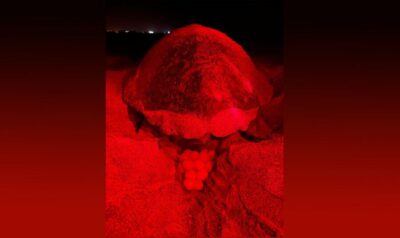
The beach comes alive after dark. I like the chance to watch Cape Verde’s common turtles nesting in the wild, and I like that trained guides use red lights and stress quiet, careful behavior. The $37 price is also fair for hotel pickup, transport, and a three-hour small-group outing. The main drawback is patience: you may wait an hour or more before any turtle appears.
This is not a quick wildlife photo stop. It is a night on a remote beach, with luck playing a large part. You may see a female laying eggs, covering her nest, and returning to the ocean. You might also see hatchlings making their first run to the water. But nature keeps its own timetable, and the guides cannot promise what you will find.
In This Review
- Key points to know before you book
- Why Sal is important for nesting turtles
- From Santa Maria to a deserted beach
- The 45-minute introduction in Santa Maria
- Two hours at Kite Beach
- What watching a female turtle is really like
- The chance to see hatchlings
- How the conservation rules shape the visit
- Is $37 good value for Sal?
- Who will enjoy this most
- Booking, cancellation, and language details
- Final verdict: should you book it?
- FAQ
- How long does the sea turtle watching experience last?
- Where does the tour go?
- What turtles might I see?
- Are turtles guaranteed to appear?
- Which languages are available?
- What should I bring?
Key points to know before you book
- Sea turtles in their natural setting: Watch nesting females and, if timing works, hatchlings reaching the sea.
- Small groups of up to 10: The limited group size helps keep the beach quieter and makes it easier to hear the guide.
- Conservation comes first: Red lights, no flash photography, no touching, and strict rules about silence help reduce disturbance.
- Guides speak four languages: Portuguese, English, French, and Italian are available.
- A low price for an evening outing: At $37, the tour includes hotel transfer, fuel, taxes, service charges, and a local guide.
- Expect waiting and uneven timing: The activity information gives both a 7 PM start and an 8 PM pickup, with an ending time that can reach 11 PM, so confirm the exact schedule.
Why Sal is important for nesting turtles
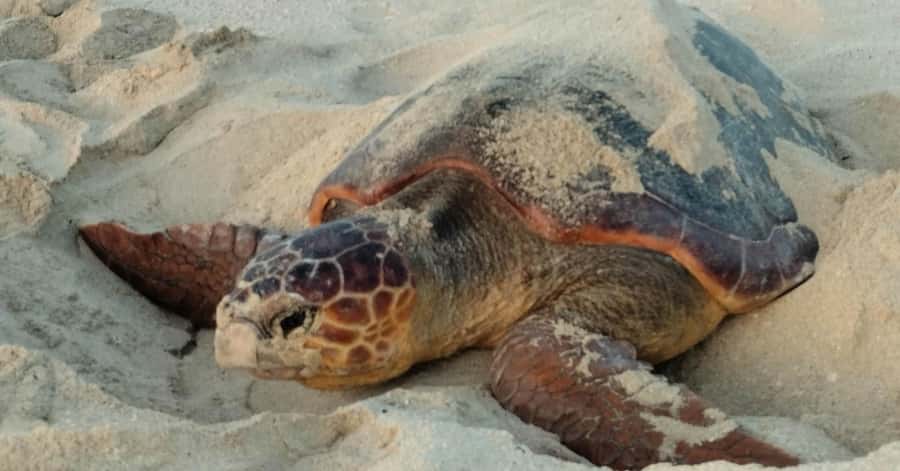
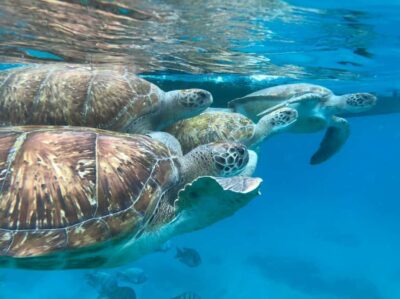
Cape Verde’s sandy shores are among the important nesting areas for the common turtle, also called the yellow turtle. The island is home to three turtle species, but this is the one you are most likely to encounter on Sal.
The nesting season is a limited window, and local rules can affect access. One visit in late September noted that the government was stopping turtle watching after September 30 so the animals could have a quieter period. That means you should check the operating dates closely if your holiday falls near the end of the season.
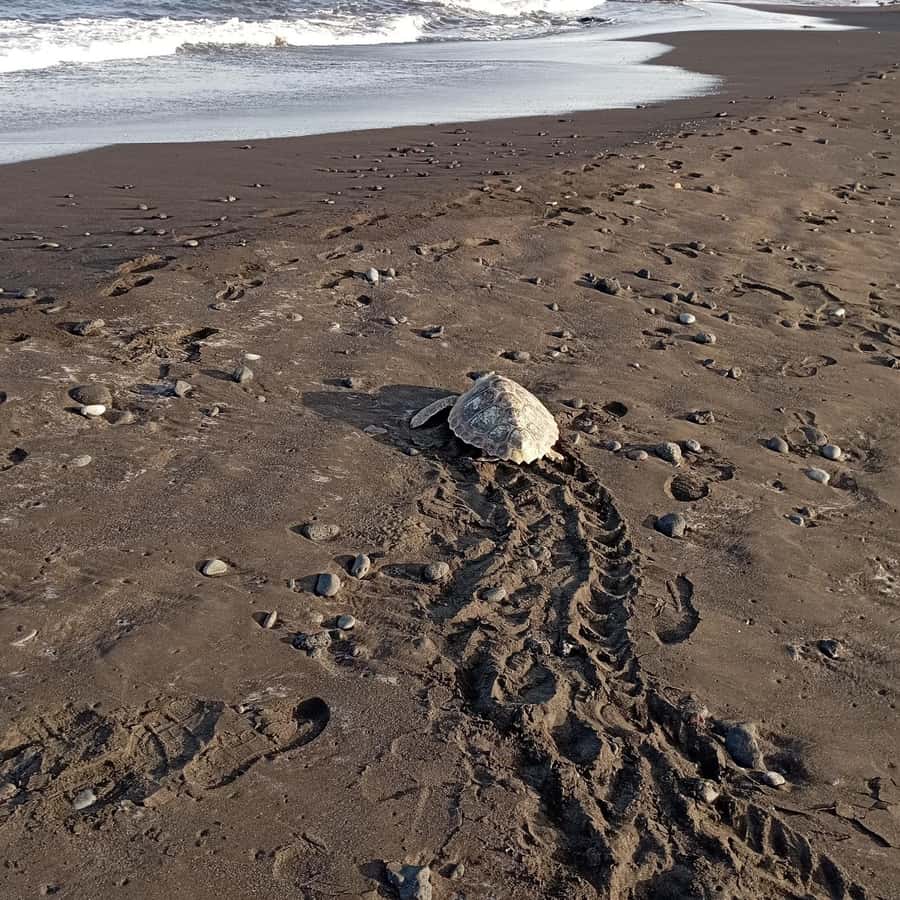
The appeal here is not simply seeing an unusual animal. You are watching a careful sequence that has unfolded for generations: a female leaves the water, finds a place in the sand, digs, lays her eggs, covers the nest, and crawls back toward the sea. The guides explain this process from beginning to end, including the turtles’ development, physical features, and behavior.
I find that context matters. Without it, you may see a turtle moving slowly across a dark beach and miss the work taking place beneath the sand. With an expert guide nearby, the waiting becomes part of the lesson.
More Turtle Watching in Sal
- Sal: Turtle Nesting with professional local guide
★ 4.7 · 18 reviews - Watch Sea Turtles Nesting – Night Tour in Sal Island
★ 4.1 · 14 reviews - Santa Maria: Sea Turtle Watching Experience on Sal Island
★ 4.0 · 9 reviews
From Santa Maria to a deserted beach
Pickup is offered at a long list of hotels and meeting points around Santa Maria. These include Hotel Morabeza, Hotel MiraBela, the Riu properties, Meliá resorts, Hilton Cabo Verde Sal Resort, Oasis Salinas Sea, Robinson Cabo Verde, The Budha Beach Hotel, Hotel Sobrado, Hotel Da Luz, and several other central locations.
The transfer is by comfortable, air-conditioned vehicle. The information says you are collected from your accommodation reception, and the beach is reached in less than an hour. That is useful after dark, since you do not need to arrange your own taxi or find an unfamiliar coastal road.
There is a small timing wrinkle. The activity details give an 8 PM pickup, while the general schedule says the activity starts at 7 PM and usually finishes by 11 PM. The stated duration is three hours, but the full evening can run longer when you include transfers and waiting. I would confirm your pickup time before the day of the tour, especially if you have dinner plans or an early morning excursion.
The drive itself is part of the change in mood. Santa Maria is a resort town, but the turtle beaches are quiet and unlit. Once you leave the built-up area, you are heading toward a darker, more open shore where the night sky becomes part of the experience.
The 45-minute introduction in Santa Maria
The first guided portion is listed as about 45 minutes in Santa Maria. This is where the guide can give you the basic information before the group begins searching the beach.
You learn about the three turtle species found in Cape Verde, with special attention to the common turtle. The guide also explains why turtle welfare is treated as a priority on Sal and how human behavior can affect nesting animals.
The language setup is practical for an international group. Guides offer Portuguese, English, French, and Italian. When several languages are involved, explanations may be divided between guides or given in stages. One English-speaking visitor found that the team handled the language mix well, even when the rest of the group spoke other languages.
Specific guides praised for their care and communication included Sousa, his daughter, Anastassi Salsa, and a guide called Johnny Cash. The important point is not the name alone, but the approach: the guides are described as attentive, engaged, and serious about protecting the turtles. One guide was especially good at building a friendly connection with the group, while another made sure an English speaker was not left out.
Two hours at Kite Beach
The main part of the evening takes place at Kite Beach, listed as a two-hour guided visit. In practice, the group may move between nearby sections of beach rather than remain in one fixed spot.
That movement is not necessarily a flaw. The guides may walk along the sand to look for signs of activity, then shift the group when a turtle or hatchlings are found elsewhere. At the same time, this can feel unstructured if nobody explains what is happening. One account describes more than an hour of waiting while guides searched the shore, followed by a move to another site for egg laying.
You need to be comfortable with that pause. The best advice is to arrive expecting observation rather than constant action. Bring comfortable clothing and shoes, settle in, and accept that the first part of the visit may involve watching the guides scan the beach.
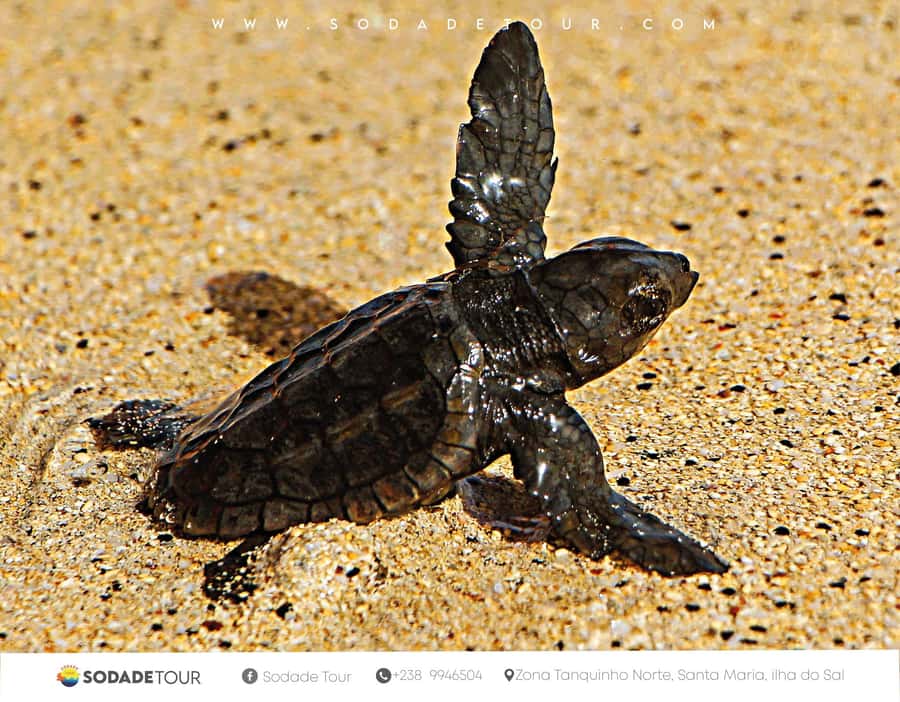
When activity begins, the mood changes quickly. The group may first see baby turtles emerging from the sand and moving toward the ocean. Later, you might watch a female come ashore and begin laying eggs. Some visitors have been lucky enough to see both hatchlings and an adult in the same evening.
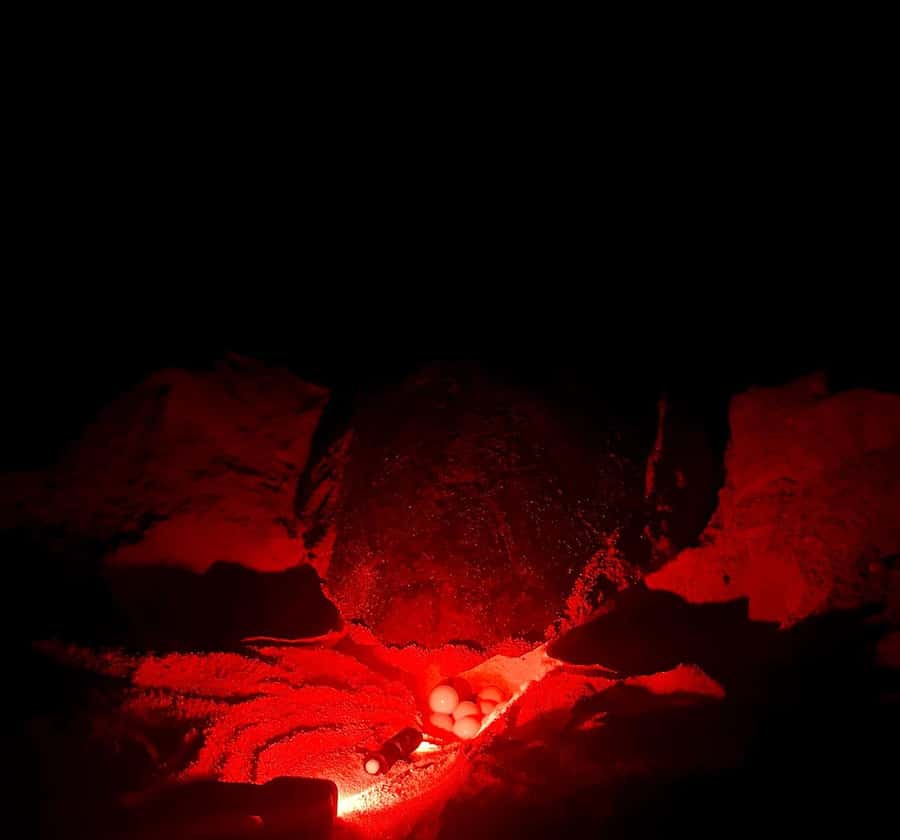
The guides use red lights rather than white beams. This helps them work without shining harsh light directly at the animals. Flash photography is forbidden, and you must not touch the turtles. The group is asked to sit and remain as quiet as possible while the female is nesting.
More Turtle Watching in Santa Maria Cape Verde:
- Boavista by Moonlight: The Sea Turtle Experience
★ 5.0 · 1 review - Santa Maria: Sea Turtle Watching Experience on Sal Island
★ 4.6 · 446 reviews - Boa Vista: Shark, Turtles, Cave, Sandboarding & Tasting Tour
★ 4.8 · 328 reviews - Boavista: Turtle, Shark, Santa Monica, Sandboard & Tasting
★ 4.7 · 228 reviews
What watching a female turtle is really like
The most powerful part of the experience is usually the egg-laying sequence. You watch the turtle make her nest, release the eggs, cover them, and return to the water. The process is slow and deliberate, so you have time to understand what is happening rather than simply catch a quick glimpse.
The distance and position of the group depend on the guide and the turtle’s behavior. The aim is to let you see without crowding the animal. You should not expect to stand over the turtle, pose beside her, or handle hatchlings. Those restrictions are exactly what make the encounter responsible.
The guides also explain why the turtle’s welfare comes first. Noise, bright light, physical contact, litter, and careless movement can disrupt nesting. The rules are simple, but they matter: no flash, no touching, no smoking, no alcohol in the vehicle, and no littering.
A garbage bag is included on the suggested packing list. That may seem like a minor detail, but it reinforces the standard expected on the beach. Carry out anything you bring in. Biodegradable sunscreen and biodegradable insect repellent are also recommended.
The chance to see hatchlings
Hatchlings are not guaranteed, but the possibility adds another layer to the evening. Several accounts describe baby turtles emerging from the sand and scurrying toward the sea. Watching that first movement is brief, so you need to pay attention and follow the guide’s instructions.
The young turtles may appear before or after a nesting female. One evening involved waiting for activity, seeing hatchlings reach the water, then moving to another area to watch an adult lay eggs. This kind of sequence explains why the tour can feel longer than a simple three-hour schedule.
You should also understand that the guide cannot control the order of events. A quiet wait is not a sign that the outing has failed. The beach may be empty for a while, then suddenly produce one of the most memorable sights of your holiday.
The starry sky is another small reward during the waiting periods. With little artificial light on a deserted beach, you may spend part of the evening looking upward as well as toward the sand.
How the conservation rules shape the visit
This experience works best when you see yourself as a quiet observer, not an active participant. You do not feed the animals, touch them, surround them, or use bright lights. Smoking is not allowed in the vehicle or indoors, and drugs, alcohol, explosive substances, and alcoholic drinks in the vehicle are prohibited.
The no-flash rule is especially important for photography. You can bring a camera, but you may not get the bright, close-up image you imagined. That is a fair trade. A sharp photograph is less important than allowing the turtle to finish nesting and return to the ocean.
The guides are also expected to manage the group. One account felt there were slightly too many people at the beach, although the guides worked to give the turtles space. The official group limit is 10 participants, which is smaller than many coach-based outings, but the beach may contain more than one group at a time.
If you want the quietest possible encounter, follow the guide closely, keep voices low, and avoid stepping ahead for a better view. The turtle, not the camera, sets the rules.
Is $37 good value for Sal?
At $37 per person, I consider this a good-value wildlife outing. The price includes a professional local guide, hotel pickup and drop-off, fuel, taxes, and service charges. You do not need to pay separately for transport to a remote beach.
Food and drinks are not included, so eat before pickup and bring only what is allowed. Alcoholic drinks are not permitted in the vehicle, and there is no suggestion that refreshments are provided during the wait.
The value depends on your expectations. If you need guaranteed turtle sightings and constant activity, no wildlife tour can fully offer that here. If you understand that you are paying for access, transport, conservation guidance, and a chance to observe a natural event, the price is strong.
One direct assessment described this as the cheapest option available and saw no need to pay more for another company. That is useful advice for budget-minded visitors. The expensive part of the evening is not equipment or entertainment. It is getting you safely to the nesting shore with people who know how to behave around the animals.
Who will enjoy this most
I would choose this tour if you care about wildlife, can sit quietly, and do not mind waiting without a guarantee. It suits couples, small groups, older children who can follow instructions, and anyone who wants an evening that feels very different from a resort activity.
It is less suitable if you need a fixed timetable or constant narration. It is also not suitable for wheelchair users or people with visual impairments, according to the stated restrictions. Baby strollers and electric wheelchairs are not allowed.
Comfortable shoes matter because you will walk along the beach at night. Wear comfortable clothes, bring a camera without relying on flash, and pack biodegradable sunscreen and insect repellent. The suggested garbage bag is worth taking seriously.
Because the beach is dark and the activity is quiet, this is not a good choice for someone hoping to wander independently. Stay with the guides and let them decide where the group should stand.
Booking, cancellation, and language details
You can cancel up to 24 hours before departure for a full refund. The reserve-now, pay-later option lets you hold a place without paying at once, which is useful when your Sal schedule is still moving around.
Pickup is included from accommodation reception at the listed locations. The return service covers the same broad Santa Maria hotel area, including resorts and central meeting points. Check that your exact property appears when you reserve, since the pickup list is long and some names appear more than once.
The live guide languages are Portuguese, English, French, and Italian. The small group is limited to 10 people, although more than one group may be active along the beach.
Final verdict: should you book it?
Book this if you want a respectful, affordable chance to see Cape Verde’s common turtles nesting in the wild. The strongest parts are the caring guides, the red-light practice, the small group, and the possibility of seeing both hatchlings and a female laying eggs.
Skip it if you cannot tolerate waiting, need guaranteed wildlife sightings, or have mobility or visual access needs that the tour cannot support. Also confirm the pickup time, since the published information gives both 7 PM and 8 PM start details.
For most wildlife-minded visitors in Santa Maria during the nesting season, I would book it. Just bring patience, quiet shoes, and realistic expectations. The reward may be a few minutes of turtle activity after a long wait, but those few minutes can be the part of your Sal holiday you remember longest.
FAQ
How long does the sea turtle watching experience last?
The activity is advertised as three hours, with the main beach visit lasting about two hours. The schedule also says it may start at 7 PM and usually finish by 11 PM, while pickup details mention 8 PM, so confirm the exact timing before departure.
Where does the tour go?
The evening includes a guided portion in Santa Maria and a two-hour guided visit at Kite Beach. The beach area may change during the search for nesting turtles or hatchlings.
What turtles might I see?
Cape Verde is home to three turtle species. The yellow turtle, also called the common turtle, is the most common species and is the main nesting turtle associated with this experience.
Are turtles guaranteed to appear?
No guarantee is stated. You may need to wait while the guides search the beach, and sightings depend on natural turtle activity. You might see a nesting female, hatchlings, or both.
Which languages are available?
Live guides are available in Portuguese, English, French, and Italian.
What should I bring?
Bring comfortable shoes, comfortable clothing, a camera, biodegradable sunscreen, biodegradable insect repellent, and a garbage bag. Flash photography, touching animals, smoking, alcohol in the vehicle, and littering are not allowed.
Just added in Santa Maria Cape Verde
- Windsurf Lessons★ 5.0 · 2 reviews
- Santa Maria: Scuba Diving Package with 3 Dives★ 5.0 · 1 review
- Santa Maria: Open Water Diver – PADI or SSI Course★ 5.0 · 1 review
- Santa Maria: Advance Open Water Diver – PADI or SSI Course★ 5.0 · 1 review
- Sal: Small Group Island Tour & Lunch with a Local Family★ 4.4 · 3 reviews
- Sal Island: Santa Maria Snorkelling★ 4.2 · 5 reviews
- Sal: Romantic Sunset Escape with Wine and Roundtrip Transfer★ 4.3 · 3 reviews
- Romantic Sunset Experience with Glamping Silver Pack★ 5.0 · 1 review
Turtle Watching, compared.
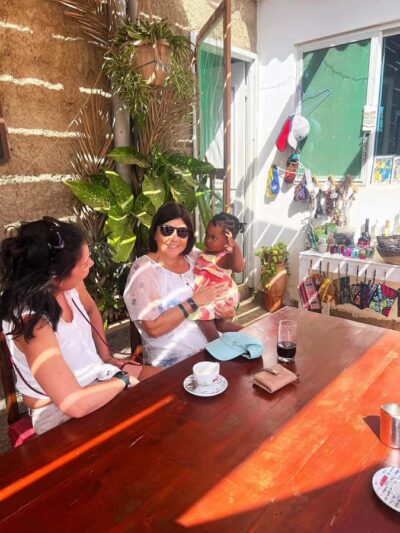
Shark, Turtles, Cave, Sandboarding & Tasting Tour
Read our review →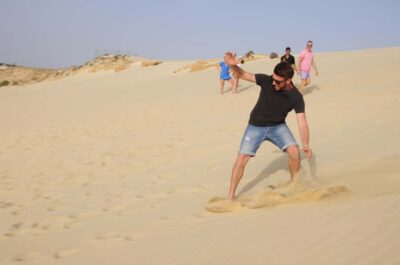
Turtle, Shark, Santa Monica, Sandboard & Tasting
Read our review →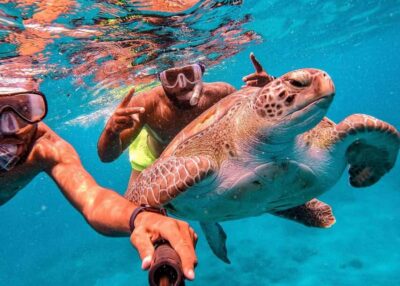
Beautiful Beaches, Turtles & Djeu Island Snorkel
Read our review →

Browse the lists this tour appears in