
Reviewed · TURTLE WATCHING
Sea Turtle Nesting Observation on Sal Island
Night brings Sal’s beach to life. This two-hour outing lets you watch a sea turtle lay eggs, cover and disguise its nest, then return to the sea. I like the careful patrol system and the use of radios, camping lights, and night-vision binoculars. I also like that the team aims for a quiet, organized observation rather than a noisy beach spectacle. The main drawback is nature’s timetable: late in the season, you may see hatchlings instead of large nesting turtles.
At $41 per person, the experience offers good value if wildlife matters more to you than a packed sightseeing schedule. Pickup is offered, the group can reach 20 people, and all fees are included. Food and drinks are not, and the two-hour estimate can feel short if you hoped for a longer evening outdoors.
In This Review
- Key points before you book
- Why Sal’s turtle season is worth your evening
- Serra Negra: the night search begins
- Following egg laying, nest closure, and camouflage
- How the guides and equipment shape the experience
- What late-season visitors should expect
- Is $41 a fair price for two hours?
- Who will enjoy this Sal Island outing?
- Pickup, timing, and practical planning
- What Mr. Friend Tours does well
- Final call: book it if you accept nature’s rules
- FAQ
- Where does the sea turtle observation take place?
- How long does the experience last?
- Does the tour offer pickup?
- What might I see during the observation?
- Is food or drink included?
- What equipment is used?
- How many people can join the tour?
- Can I cancel for a full refund?
Key points before you book
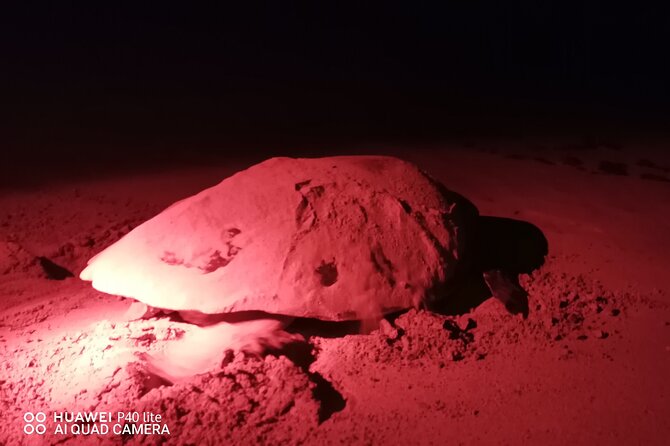
- Watch the full nesting process: You may see egg laying, nest closure, camouflage, and the turtle’s return to the sea.
- Serra Negra is the viewing area: The authorized beach location is where the patrol guides search for turtles.
- Two patrol guides coordinate the search: They locate the turtle and use walkie-talkies to direct the driver and group.
- Night equipment supports careful viewing: Camping lights, radios, and night-vision binoculars are used during the activity.
- Late-season visits may focus on hatchlings: One recent outing included cute baby turtles but no large nesting turtles.
- Pickup and a small maximum group help: The tour lasts about two hours and accepts no more than 20 people.
Why Sal’s turtle season is worth your evening
Sea turtle nesting is one of those nature experiences that cannot be scheduled like a museum visit. The animals decide when they appear, where they crawl, and how long they take. That uncertainty is part of the value, but it also means you should arrive ready to observe rather than expecting a guaranteed close encounter.
This outing takes place at night, when nesting turtles come onto the beach. The darkness is not just a mood setter. It is part of the setting in which the turtles carry out their natural behavior, and the tour’s equipment is meant to help the team find and watch them with limited disturbance.
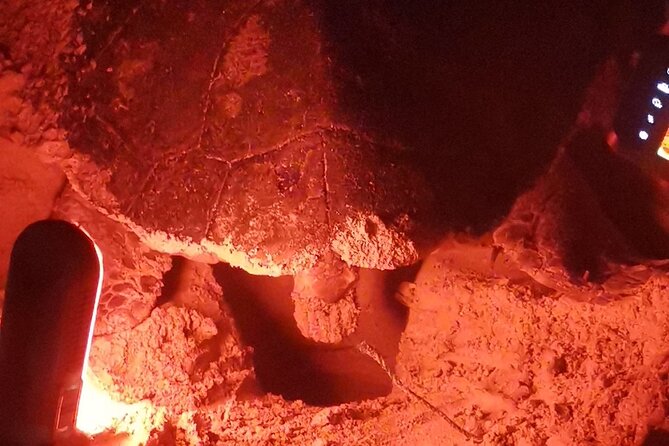
I like the way the experience follows the animal’s own routine. You are not simply taken to a beach, shown a turtle, and sent home. If the patrol team locates a nesting turtle, you may follow the process from the first work of laying eggs through the turtle’s return to the water.
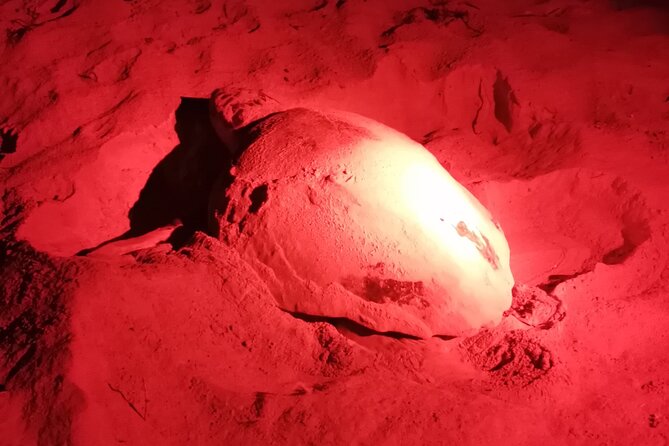
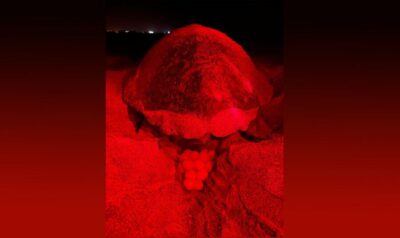
That sequence gives the outing real substance. You can see how much effort goes into a nest after the eggs are laid. The turtle closes the opening, shifts sand around the site, and camouflages the area to make it harder for predators to find. The final return to the sea provides a natural ending, though the exact order and timing depend on what the animal is doing when it is found.
More Turtle Watching in Sal
- Turtle Watching Adventure
★ 5.0 · 98 reviews - Private Turtle Watching Experience
★ 5.0 · 12 reviews - Turtle Experience in Sal island
★ 4.0 · 5 reviews
Serra Negra: the night search begins
After pickup, the group travels to Serra Negra, the beach area where the company is authorized to operate. This detail matters. Turtle watching needs rules and controlled access, and an authorized location gives the activity a more responsible framework than simply wandering along a beach at night.
At the beach, two patrol guides begin searching for a turtle. Their job is not only to find one, but also to communicate its position to the driver and help place the group at a suitable observation point. Walkie-talkies keep that process organized, especially when the search team and the vehicle are working separately.
You should expect some waiting and quiet movement at this stage. The patrol needs time to locate an animal, and the group cannot treat the beach like an ordinary evening stroll. The experience depends on patience. If you need constant action every minute, this may not be your ideal excursion.
Once a turtle is found, the driver takes the group toward the viewing point. The description does not promise a particular distance from the turtle, and you should not expect a hands-on encounter. This is observation, not interaction. That is good news for the animal and a useful expectation for you.
Following egg laying, nest closure, and camouflage
The most valuable part of the tour is the chance to watch several stages of nesting behavior. The turtle first lays its eggs. Then it closes the nest and moves sand over the opening, eventually working to disguise the site.
The camouflage is especially interesting because it shows that nesting is more than a simple crawl onto the beach and return to the ocean. The turtle’s movements help hide the eggs from predators. Watching this process gives you a better sense of the effort involved in producing and protecting a nest.
You may also find that the turtle’s pace is slower than you expect. That is not a flaw in the tour. It is the animal’s natural rhythm. The best approach is to listen to the guides, keep your movements controlled, and let the scene unfold without trying to rush it.
The final stage is the turtle’s trip back to the sea. After spending time on land, the animal returns to its natural habitat. This can be the most moving moment of the evening, but the exact timing depends on when the turtle finishes its work.
Because the experience is wildlife based, the tour cannot promise that every person will see every stage. The patrol team goes looking, but the animal controls the result. That is the tradeoff for seeing real behavior rather than a scheduled performance.
How the guides and equipment shape the experience
The team uses camping lights, walkie-talkie radios, and night-vision binoculars. Each tool has a clear purpose.
Camping lights help the group move safely in a dark setting. Radios allow the patrol guides to share the turtle’s location with the driver. Night-vision binoculars can help you observe without relying only on brighter lights pointed toward the animal.
I like this combination because it suggests practical preparation. The equipment is not presented as a gimmick. It supports the search, communication, and viewing process while aiming to keep disturbance low. The supplied information also describes the equipment as helping with safety and minimal disturbance, which is important for a nighttime wildlife activity.
Still, equipment cannot remove every limitation. A night beach remains dark, and your view may depend on where the turtle is located and how the group is positioned. You should not book this expecting the bright, clear visibility of a daytime attraction.
The patrol arrangement is another useful feature. Two guides search while the driver coordinates transport to the observation point. That division of duties can save time once a turtle is found, instead of having one person manage every part of the outing.
More Turtle Watching in Santa Maria:
- Santa Maria: Sea Turtle Watching Experience on Sal Island
★ 4.6 · 446 reviews - Boa Vista: Shark, Turtles, Cave, Sandboarding & Tasting Tour
★ 4.8 · 328 reviews - Santa Maria: Sal Island Sea Turtle Watching Experience
★ 4.5 · 256 reviews - Boavista: Turtle, Shark, Santa Monica, Sandboard & Tasting
★ 4.7 · 228 reviews
What late-season visitors should expect
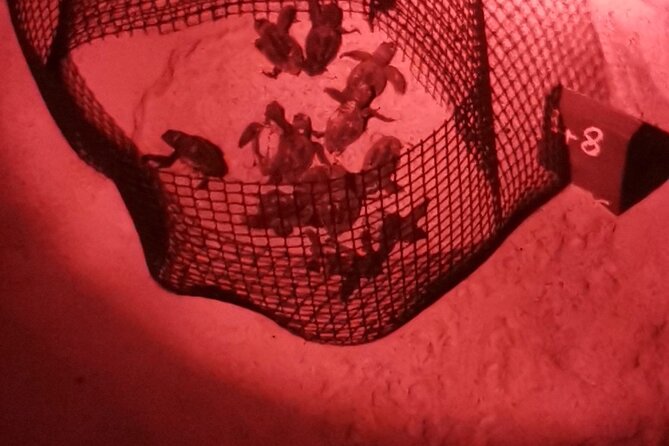
The season can change the focus of the experience. A recent outing took place late in the season and did not produce sightings of large nesting turtles. Instead, the group saw baby turtles, which were described as especially cute.
That is an important detail when you decide when to book. A late-season trip may not offer the exact nesting scene you have in mind, but it can still bring a different kind of wildlife encounter. Hatchlings provide their own memorable sight, even if they do not allow you to watch egg laying, nest closure, and camouflage.
The safe promise here is variety, not certainty. You might see a large turtle nesting. You might see hatchlings. You might spend time searching and see less than hoped. Nature does not follow a tour operator’s timetable.
I would treat this uncertainty as a central part of the experience, not a footnote. If your goal is to support a nature outing and enjoy the possibility of seeing turtles, the tour makes sense. If you need one specific animal behavior guaranteed, you may find the conditions frustrating.
Is $41 a fair price for two hours?
At $41 per person, the price is reasonable for a guided wildlife outing that includes pickup and all fees. You are paying for transport to the authorized beach, a coordinated search, patrol support, communication equipment, viewing gear, and the chance to witness behavior that is difficult to arrange independently.
The value depends heavily on your expectations. If you see a turtle complete its nesting routine, the price can feel strong because the experience offers something unusual rather than another standard beach stop. If the search produces only a brief sighting or late-season hatchlings, the value becomes more personal and less predictable.
The two-hour estimate also affects the calculation. This is a focused evening activity, not a full-day excursion. You can fit it into a Santa Maria visit without giving up most of your day, but you should not expect a long nature program with meals or extra activities.
Food and drinks are not included. Plan accordingly, especially if the outing takes place around your normal dinner time. The supplied information does not specify refreshments, so do not count on them being provided.
With a maximum of 20 people, the group is limited but not private. That size should help the team move people in an orderly way, though your personal view can still depend on where you are placed at the observation point.
Who will enjoy this Sal Island outing?
I would recommend it most strongly to people who enjoy wildlife, night activities, and patient observation. Families may like the chance to see baby turtles, though adults should explain that the animal’s welfare comes before getting a perfect photograph.
It also suits visitors who have already spent time on Santa Maria’s beaches and want to see another side of Sal. The outing is not built around scenery, food, or entertainment. Its appeal comes from watching a specific natural process in a controlled setting.
The experience may be less suitable for anyone who wants a guaranteed sighting of a large turtle. It may also disappoint you if you dislike waiting, darkness, or a schedule shaped by animals rather than by the clock.
The maximum group size of 20 is worth noting. That is manageable for a coordinated search, but it is not the same as a private guide and private beach. If having a fully personal viewing position matters to you, ask the provider for more detail before booking.
Pickup, timing, and practical planning
Pickup is offered, which makes the tour easier to fit into a stay in Santa Maria. The exact pickup details are not provided here, so confirm the meeting arrangement when you book.
Confirmation is provided at the time of booking. The activity is near public transportation, and most people can participate. Those points make it fairly accessible as a general excursion, but the information does not give specific details about beach surfaces, vehicle type, or mobility accommodations.
The tour lasts approximately two hours. The word approximately matters because the search and observation depend on the turtles. A sighting may require patience, and the evening may not run like a strict two-hour theater show.
Bring a calm attitude and dress for an outdoor night setting. The tour information does not specify a clothing list, so I would avoid assuming that anything beyond the supplied equipment will be provided. Food and drinks are excluded, so arrange those separately.
The free cancellation rule is useful if your plans are uncertain. You can cancel for a full refund up to 24 hours before the start time. Changes or cancellations made less than 24 hours before the start time are not accepted for a refund, and the cutoff uses local time.
What Mr. Friend Tours does well
The strongest part of this experience is the organized team effort. Evandro and his crew made a special effort to find as many turtles as possible on one outing. Even though the season was late and no large turtles appeared, the group still had a worthwhile encounter with hatchlings.
That detail tells you something useful about the provider’s approach. The team does not simply stop searching after one quick attempt. The patrol guides look for turtles, communicate with the driver, and work to give the group the best possible chance within natural limits.
I also value the fact that the experience includes the full nesting process when conditions allow. Egg laying, nest closure, camouflage, and the return to the sea create a much stronger memory than a brief glimpse of a turtle crossing the sand.
The tour’s five-star rating is based on only two published ratings, so I would not treat it as a large statistical record. Still, the praise focuses on the team’s effort and the quality of the wildlife encounter, which are exactly the areas that matter most here.
Final call: book it if you accept nature’s rules
Book this tour if you want a rare nighttime wildlife experience and can accept an uncertain result. The strongest reasons are the authorized Serra Negra setting, the two-guide search system, practical night equipment, and the chance to see the entire nesting routine.
I would be especially comfortable choosing it for a Sal Island trip when turtles are a priority. The $41 price is fair for a two-hour guided outing with pickup and included fees, though you should budget separately for food and drinks.
Skip it if you need guaranteed large turtles, a private group, or a fast-moving activity with no waiting. But if you can stay quiet, remain patient, and let the beach set the pace, this may become one of your most memorable evenings in Santa Maria.
FAQ
Where does the sea turtle observation take place?
The activity takes place at Serra Negra, on beaches where the company is authorized to conduct the tour.
How long does the experience last?
The tour lasts approximately two hours.
Does the tour offer pickup?
Yes. Pickup is offered.
What might I see during the observation?
You may see a turtle laying eggs, closing its nest, camouflaging the area, and returning to the sea. A late-season outing may instead include sightings of baby turtles.
Is food or drink included?
No. Food and drinks are not included in the price.
What equipment is used?
The team uses camping lights, walkie-talkie radios, and night-vision binoculars.
How many people can join the tour?
The maximum group size is 20 people.
Can I cancel for a full refund?
Yes. You can cancel at least 24 hours before the experience start time for a full refund. Cancellations or changes made less than 24 hours before the start time are not accepted for a refund.
Just added in Santa Maria
- Turtle Experience in Sal island★ 4.0 · 5 reviews
- Secrets of Sal Island 4×4 Tour with Pedra da Lume Salt Lake★ 4.5 · 6 reviews
- Private Sal island: Pedra de Lume Village, Salt Lake & Shark Tour★ 5.0 · 2 reviews
- Sal island: Private Santa Maria City Tour, Street Art and Tapas★ 5.0 · 6 reviews
- Sal Island All-inclusive Adults-only Catamaran Cruise★ 5.0 · 3 reviews
- Sal Island: Guided Full-Day Highlights Tour with Lunch★ 5.0 · 5 reviews
- Full Day Postcards of Sal Tour with Kite Beach and Local Lunch★ 3.5 · 5 reviews
- 4×4 Off Road Full-Day Private Tour – Sal Island Hidden Secrets★ 5.0 · 3 reviews
Turtle Watching, compared.
Shark, Turtles, Cave, Sandboarding & Tasting Tour
Read our review →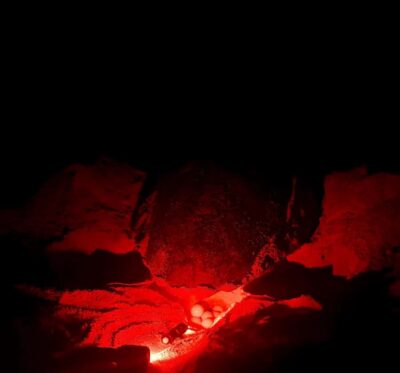
Turtle, Shark, Santa Monica, Sandboard & Tasting
Read our review →
Beautiful Beaches, Turtles & Djeu Island Snorkel
Read our review →
Browse the lists this tour appears in