
Reviewed · CIDADE VELHA UNESCO TOURS
Santiago Island: 4-Hour Calabaceira Valley Hike & Guided Tour to Cidade Velha
Cape Verde’s past begins on foot. This four-hour outing pairs an easy trek through Calabaceira Valley with the major sights of Cidade Velha, making it a smart introduction to Santiago. I especially like the mix of farms, plants, and village life in the valley, followed by the churches, fort, and old streets of Cape Verde’s first colonial city. I also like the small maximum group of eight, which gives guides such as Ailton and Maria room to explain what you are seeing.
The main consideration is pace. You cover about 5 kilometers on foot, then make several short historic stops, so the schedule is full rather than leisurely. The trail is rated easy, but its opening section is narrow and the surface has a moderate tilt. You should also budget an extra €5 for Fortaleza Real de São Filipe.
In This Review
- Key points to know before booking
- Why this half-day outing works so well
- Walking through Calabaceira Valley
- Entering Cidade Velha through its oldest streets
- Churches, slavery, and the remains of a colonial capital
- The climb to Fortaleza Real de São Filipe
- What the small-group format changes
- Timing, clothing, and practical preparation
- Who will get the most from this tour
- Should you book the Calabaceira and Cidade Velha tour?
- FAQ
- How long does the Calabaceira Valley and Cidade Velha tour last?
- What time does the tour begin?
- Where can I be picked up?
- How long is the walking route?
- Is the hike difficult?
- Is the Fortaleza Real de São Filipe entrance fee included?
- What should I bring?
Key points to know before booking

- Calabaceira Valley takes you through working farmland, with sugar cane, mango, cassava, bananas, and other crops.
- A giant baobab linked with Charles Darwin is one of the hike’s most unusual sights.
- Cidade Velha packs major landmarks into a short walking tour, including Rue Banana, old churches, the Pelourinho, and cathedral ruins.
- The Fortaleza Real de São Filipe adds the best broad view, but its €5 entrance fee is not included.
- The group is capped at eight people, with both shared and private options available.
- The route is easy but not flat, with about 186 meters of descent and a narrow section near the beginning.
Why this half-day outing works so well

Praia gives you Cape Verde’s modern capital, but Santiago’s story reaches back through Cidade Velha and into the island’s rural valleys. This tour links those two sides of the island without asking you to arrange separate transport, a walking guide, and a historic-site visit.
You are collected at your accommodation in Praia or Cidade Velha at about 8:30 a.m. The drive toward Calabaceira takes roughly 30 minutes. That transfer matters because the hike is a one-way route, not a walk that loops back to the starting point. At the end, transportation returns you to your accommodation in Praia.
I like this arrangement for a first visit. You do not spend the morning trying to work out local transport connections, and your guide can explain the setting as you move from the city into the valley. Transportation, guide services, and liability insurance are included.
The $81.30 per-person price is fair if you value convenience and interpretation. You are paying for a small-group excursion, round-trip transport, a guided nature walk, and a historical tour in one morning. It is less attractive if you prefer to explore independently or plan to spend a long time at each Cidade Velha monument. Lunch is not included, and the fortress fee is extra.
More Hikes in Santiago
- Serra Malagueta: Principal Valley Hike & Lunch with Locals
★ 4.7 · 64 reviews - Praia: Baobab Mysterious Tree, Green Valley & Old City Hike
★ 4.8 · 53 reviews - Santiago: Calabaceira Valley Trek & Visit to Cidade Velha
★ 4.8 · 49 reviews
Walking through Calabaceira Valley
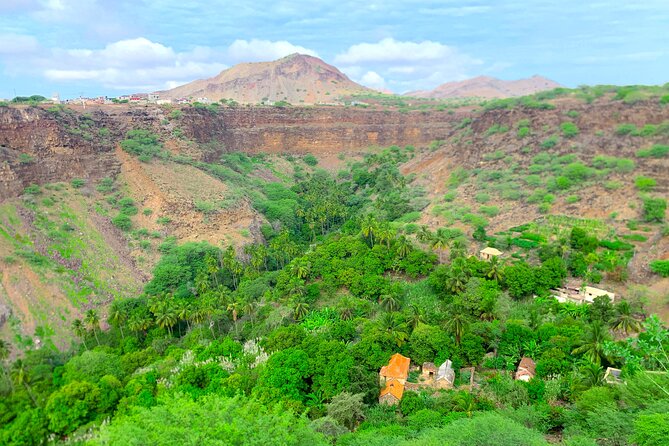
The walk begins near Igreja Calabaceira, then follows a simple trail through the valley for about two hours. The route covers approximately 5 kilometers and is described as suitable for any hiker, with an easy overall rating.
That does not mean you should arrive in sandals or office shoes. The path is narrow at the start, and the stated trail quality is medium tilt. You lose around 186 meters in elevation, moving from a maximum of about 200 meters to a low point near 14 meters. It is not a mountain climb, but you will want shoes with a decent grip.
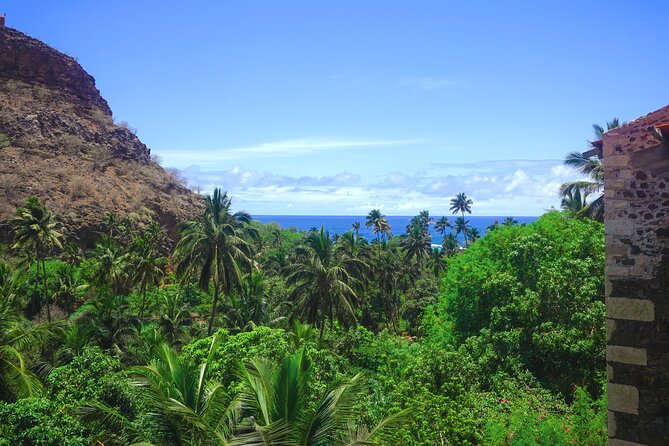
The valley’s appeal comes from its plant life and human activity. You pass agricultural fields where local farmers grow sugar cane, mango, cassava, bananas, and other crops. This is more useful than simply looking at scenery from a vehicle. You get a sense of how people use Santiago’s volcanic soil and limited water, and your guide can connect the plants with everyday life on the island.
Guide quality matters most here. Ailton has received especially warm praise for explaining both the natural setting and the area’s past. Maria is also praised for her explanations of plants, birds, history, and local culture. Since the group limit is eight, you have a reasonable chance to ask questions instead of trailing behind a large crowd.
The giant baobab is the hike’s signature sight. It is linked with Charles Darwin’s passage through Santiago, giving the tree a surprising connection to the wider story of nineteenth-century travel and science. Your guide can give the tree context, but do not expect a long formal nature lecture. The appeal is the combination of an unusual specimen, a local trail, and a story you might otherwise miss.
The walk takes place during the warmer part of the day, so bring water, a hat, and sunscreen. Hiking pants are strongly advised from August through November. That seasonal tip is worth taking seriously, since vegetation can make trousers more comfortable on the path.
Entering Cidade Velha through its oldest streets
After the valley walk, the tour turns to Cidade Velha, a UNESCO World Heritage Site and one of the most important historic places on Santiago. The city was the first Portuguese settlement in sub-Saharan Africa, and its surviving churches, streets, fortifications, and slave-trade sites make the visit far more than a quick photo stop.
The first historic stop is the Convent of São Francisco, built in the middle of the seventeenth century. It served as a place of worship and religious formation. You spend about 10 minutes here, so think of it as a guided introduction rather than an extended architectural visit.
Next comes Rue Banana, described as the first urbanized street built by the Portuguese in sub-Saharan Africa. The short stop helps you picture Cidade Velha as an organized colonial settlement, not only a collection of ruins. The street is especially useful for understanding how the town developed around trade, religion, and defense.
Churches, slavery, and the remains of a colonial capital
The Church of Nossa Senhora do Rosário dates from 1495 and is described as the oldest colonial church in the world. Its Manueline, or Portuguese Gothic, style gives the stop an architectural focus, while its age places it close to the earliest years of Portuguese settlement.
This is one of those places where a guide adds real value. A building can look simple at first glance, but the date, style, and role in the early settlement change how you read it. The visit lasts about 10 minutes, so listen closely and ask questions while you are there.
The Pelourinho, built in 1512 from white marble, has a much darker story. It was used as a slave market. The monument is visually striking, but the history behind it requires a quiet pause. Cidade Velha’s importance is inseparable from the Atlantic slave trade, and this stop puts that past in a specific place rather than leaving it as an abstract subject.
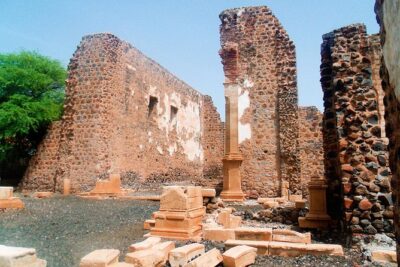
You then visit the ruins of Sé Catedral, described as the first cathedral built by the Portuguese in Africa. Only ruins remain, but that is part of the point. The broken structure helps show the scale of the old settlement and the limits of maintaining large buildings in a remote colonial outpost.
Each of these stops takes around 10 minutes. That keeps the tour moving, but it also means the visit is an overview. If you want detailed architectural study, private reflection, or extensive photography, you may find the schedule brisk.
More Cidade Velha trips:
- Praia & Cidade Velha: Guided City Tour
★ 4.8 · 80 reviews - From Praia: Cidade Velha, Tarrafal & East Side Island Tour
★ 4.8 · 23 reviews - Like Locals: Praia and Cidade Velha Tour + Local Pontxi Tasting
★ 5.0 · 19 reviews - Santiago Island: Best of Praia & Cidade Velha Tour, a World Heritage Site
★ 5.0 · 15 reviews
The climb to Fortaleza Real de São Filipe
The final major stop is Fortaleza Real de São Filipe, built in 1587 to defend Cidade Velha against pirate attacks. The fort explains why the town was placed where it was and how its defenders tried to protect the port and settlement.
The fort’s position gives you a wide view over the old town. From above, the churches, streets, ruins, and surrounding terrain fit together more clearly. This is the tour’s best place to understand Cidade Velha as a defensive city rather than a group of separate monuments.
The €5 entrance fee is not included, so carry enough money for admission. The visit lasts about 20 minutes. That is enough for the main view and an explanation of the defense system, but not for a long, unhurried exploration of every corner.
I would not skip the fortress simply because it costs extra. It is the one stop that pulls the whole visit together visually. Still, the added fee should be part of your budget when comparing this tour with other half-day options.
What the small-group format changes
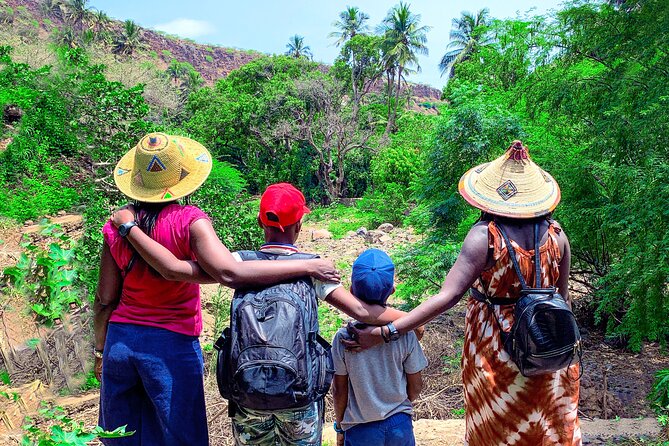
The maximum group size is eight, and that is a useful limit for this particular outing. A narrow trail is easier to manage with a small party, and a guide can respond when you ask about a crop, a church, or a piece of local history.
You can choose a shared group or private experience. The shared option should suit solo visitors and couples who want a lower price while still having a guide. A private booking makes more sense for families, photographers, or anyone who wants to adjust the pace within the available schedule.
The tour is intended for people over age six, and most people can participate. The important distinction is that easy does not mean fully accessible to every mobility level. The route includes a narrow beginning, a sloping surface, and a significant descent. The supplied details do not claim wheelchair access, so you should ask the operator directly if you need specific mobility support.
The driver also matters. Feedback gives the driver credit for being safe and accommodating, which is reassuring on an outing that combines a rural road transfer with a one-way walk.
Timing, clothing, and practical preparation
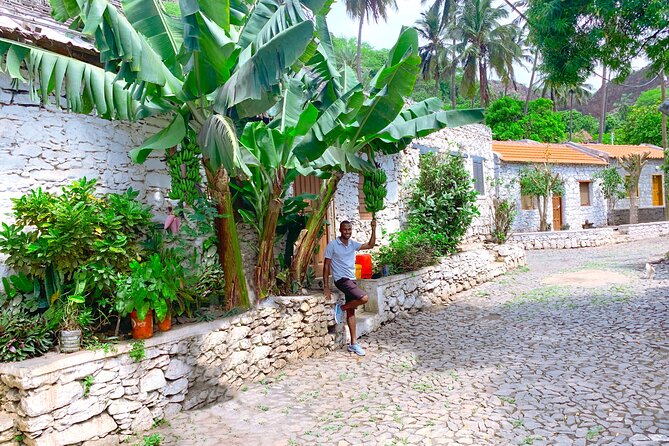
The tour starts at 8:30 a.m. and lasts about four hours. You begin with roughly 30 minutes of transport, walk for about two hours in Calabaceira Valley, then spend short periods at the Cidade Velha sights before returning to Praia.
Wear hiking trousers, especially between August and November. Choose sturdy footwear, bring water, and pack a hat and sunscreen. These are simple preparations, but they make the difference between enjoying the valley and thinking about your feet, heat, or exposed skin.
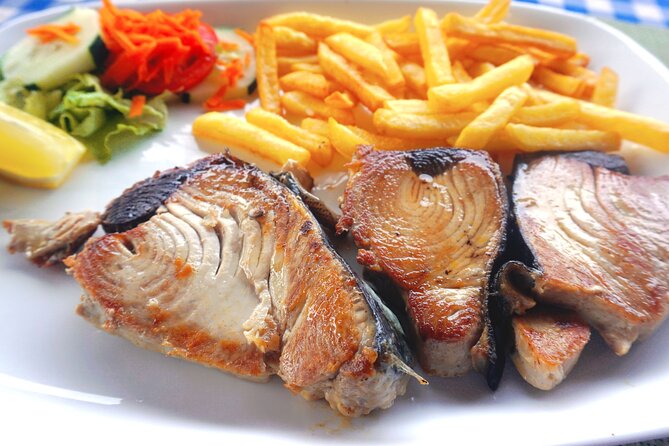
There is no lunch included. Since the activity ends around midday, you may want to plan a meal afterward in Praia or Cidade Velha, depending on your drop-off point. The tour does not present itself as a full-day cultural program, and that is a strength if you want to keep the afternoon free.
Free cancellation is available when you cancel at least 24 hours before the start time. Changes or cancellations inside that window are not accepted for a refund. The operator also requires a minimum number of people, so if that minimum is not reached, you are offered another date or experience, or a full refund.
Who will get the most from this tour
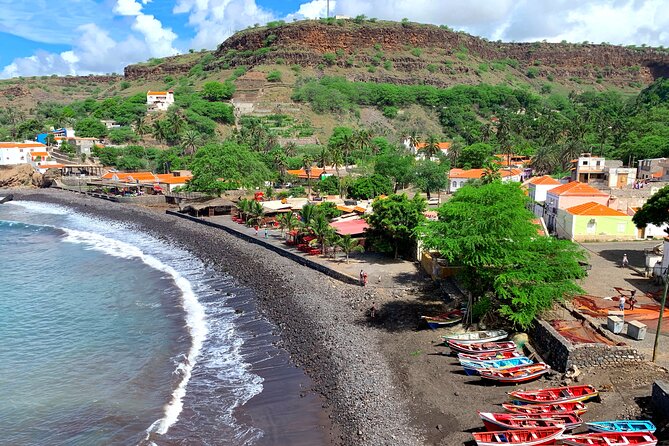
I would recommend this outing to a first-time visitor who wants Santiago’s major themes in one morning: rural agriculture, Portuguese settlement, religious buildings, the slave trade, and pirate defense.
It is also a good fit if you want an easy walk rather than a demanding hike. The valley section gives you outdoor time without turning the day into a test of endurance. Families with children over six may find the format manageable, provided everyone is comfortable with sloping and narrow paths.
History-focused visitors will appreciate the concentration of sites in Cidade Velha. Nature lovers will like the crops, valley vegetation, and baobab. The combination is the real strength. You do not have to choose between a scenic walk and a cultural visit.
I would be more cautious if you want a slow, detailed examination of every monument. Ten-minute stops move quickly, and the full route has a set structure. I would also look elsewhere if your priority is a strenuous hike, a long lunch, or a full-day tour of Santiago.
Should you book the Calabaceira and Cidade Velha tour?
Book it if you want an efficient, well-rounded introduction to Santiago and prefer having transport and guiding handled for you. The strongest reasons are the working farmland in Calabaceira, the Darwin-linked baobab, the concentrated historical sights, and the small group size.
The guides are a major part of the experience. Ailton’s explanations of nature and local history, along with Maria’s attention to plants, birds, and culture, are exactly the kind of personal interpretation that turns a short tour into a useful first look at the island.
Before paying, make sure you are comfortable with the narrow opening trail, the 5-kilometer walk, and the extra €5 fortress admission. If those details suit you, this is a strong-value half-day choice that gives you both Santiago’s countryside and Cidade Velha’s difficult, important past.
FAQ
How long does the Calabaceira Valley and Cidade Velha tour last?
The experience lasts approximately four hours, including transportation, the valley hike, the Cidade Velha visits, and the return to Praia.
What time does the tour begin?
Pickup and the tour start at approximately 8:30 a.m.
Where can I be picked up?
Pickup and drop-off are offered at accommodations in Praia or Cidade Velha.
How long is the walking route?
The route covers approximately 5 kilometers, with about two hours of total walking time.
Is the hike difficult?
The route is rated easy and is described as suitable for any hiker. However, the beginning is narrow, the path has a moderate tilt, and the route includes about 186 meters of descent.
Is the Fortaleza Real de São Filipe entrance fee included?
No. Entrance to the fortress costs €5 per person and is paid separately.
What should I bring?
Wear decent footwear and hiking pants, especially from August through November. You should also bring water, a hat, and sunscreen.
More Hikes in Praia
- Santiago: Monte Tchota Natural Park to Pico d’Antónia Hike
★ 4.8 · 43 reviews - Serra Malagueta Natural Park Hike & Relaxing Swim at Tarrafal Beach
★ 5.0 · 30 reviews - Serra Malagueta Natural Park: Hike to Gongon Valley & Lunch
★ 4.8 · 22 reviews - Santiago: Trek from Serra Malagueta to Rabelados Community
★ 5.0 · 16 reviews
Just added in Praia
- Hiking Águas Belas Cave★ 4.5 · 3 reviews
- Santiago Island: Private Airport Transfer to Praia or Vice Versa★ 5.0 · 3 reviews
- Tarrafal Beach Tour: Boat Trip to the Lighthouse, Snorkel & BBQ Lunch★ 5.0 · 5 reviews
- Santiago island & Full Day Island★ 5.0 · 2 reviews
- Best of Santiago Island: Cidade Velha, Workshop & Tarrafal Beach Tour★ 4.5 · 3 reviews
- Santiago Island: Trek from Serra Malagueta to Rabelados Community★ 5.0 · 2 reviews
- Santiago Island: Longueira, Pico de Antónia & Monte Tchota Trek★ 5.0 · 1 review
- Hiking Serra Malagueta Natural Park★ 5.0 · 2 reviews
Cidade Velha UNESCO Tours, compared.

Santiago Island: Highlights of Cidade Velha with Local Guide
Read our review →
Like Locals: Praia and Cidade Velha Tour + Local Pontxi Tasting
Read our review →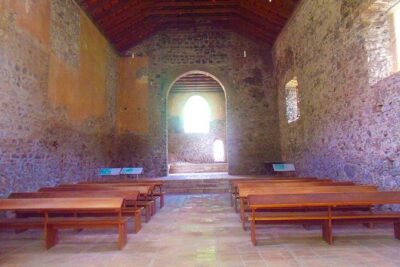
Santiago Island: Best of Praia & Cidade Velha Tour, a World Heritage Site
Read our review →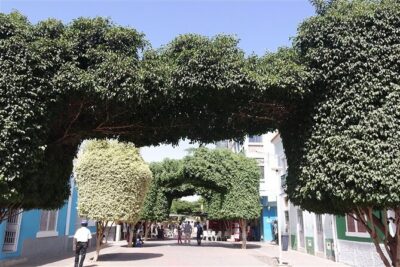
Guided City tour Praia with Cidade Velha (World Heritage)
Read our review →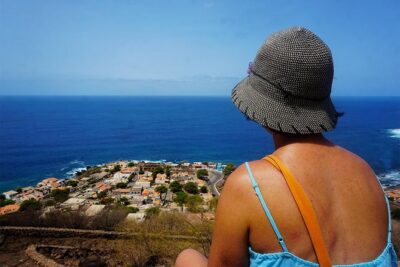
Shore Excursion: 3-Hour Guided Historic Tour of Praia & Cidade Velha
Read our review →Browse the lists this tour appears in