
Reviewed · CIDADE VELHA UNESCO TOURS
Praia: Plateau and Cidade Velha Guided Tour
History lives in the streets here. This four-hour tour links Praia’s Plateau with Cidade Velha, the first city built by Europeans in sub-Saharan Africa, giving you a useful introduction to Cape Verdean culture, colonial rule, slavery, markets, and daily life. I especially like the mix of local contact at the Municipal Market and Sucupira Market, plus the chance to see Cidade Velha’s major ruins without arranging transport yourself. The main drawback is that lunch and the 5-euro entrance fee to the Royal Fortress cost extra, so the $70 price is not the final bill.
The small group, limited to 10 people, should make the walking portions easier to manage than a large coach excursion. Guides speak English, French, Portuguese, and Spanish. Edney has been praised for his French, flexibility, and personal stories, while David has earned strong marks for explaining Cape Verdean culture, local plants, wildlife, and island history. You should still expect plenty of walking, sun, uneven surfaces, and a schedule that may feel brisk in four hours.
In This Review
- Key points at a glance
- Why this half-day tour works
- Starting in Plateau, Praia
- Local life at the Municipal Market
- Sucupira Market and the city’s shopping side
- The road to Cidade Velha
- São Filipe Fortress above the old town
- Cathedral ruins and the marks of empire
- Pelourinho, Banana Street, and the old churches
- Fishermen, boats, and the sea
- A local lunch with a sea view
- What $70 really buys you
- Who should book it
- Should you book this Praia and Cidade Velha tour?
- FAQ
- How long does the Praia and Cidade Velha tour last?
- What is the price of the tour?
- Is hotel pickup included?
- Is lunch included?
- Is the Royal Fortress entrance fee included?
- Is the Municipal Market open every day?
- What languages are available for the guided tour?
- How large is the tour group?
- Is the tour suitable for wheelchair users?
- What should I bring?
Key points at a glance
- Two important sides of Santiago: See Praia’s modern civic center and markets, then visit the old colonial capital of Cidade Velha.
- A serious look at slavery: The route includes the old slave market at Pelourinho and explains how the island’s past shaped Cape Verdean society.
- Markets are part of the experience: The Municipal Market offers local produce and everyday contact, while Sucupira is Praia’s largest flea market.
- The Royal Fortress costs extra: Allow 5 euros per person for entry to São Filipe Fortress, set 121 meters above sea level.
- Lunch has a sea view: The meal is at a typical local restaurant, but food is not included in the tour price.
- Best for active sightseers: Comfortable shoes, water, sunscreen, and a sun hat matter more here than fancy clothing.
Why this half-day tour works
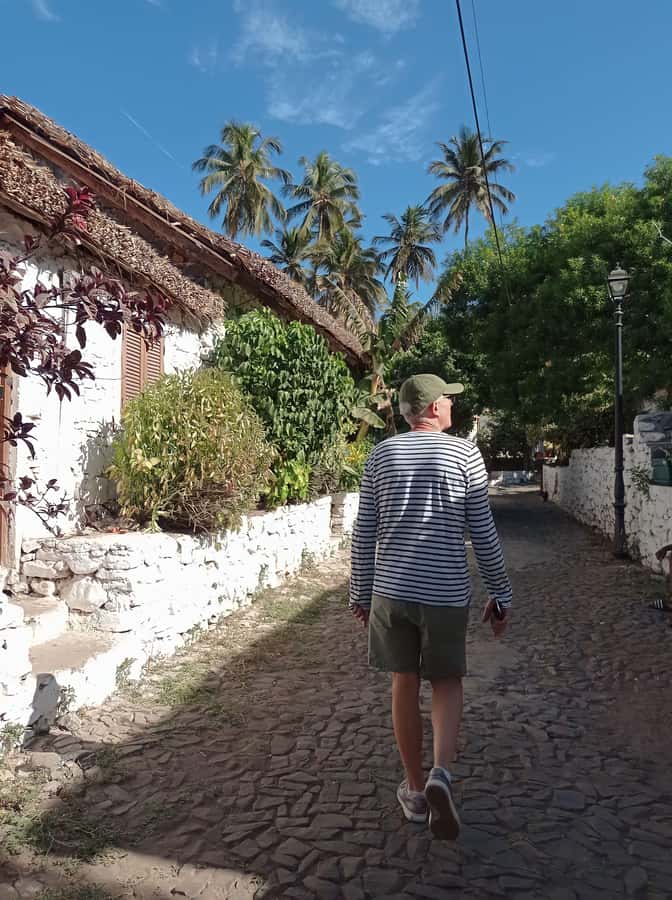
Praia and Cidade Velha are close enough to visit together, but they offer very different impressions of Santiago Island. Praia is the political and urban center, with government buildings, markets, and working streets. Cidade Velha feels older and more exposed, with stone ruins, traditional houses, fishermen, and landmarks tied to Cape Verde’s earliest colonial period.
I like the way this tour puts both places in one outing. A visit to Cidade Velha alone can leave you with a fine collection of ruins but little sense of how Cape Verde works today. Praia alone gives you the present without as much context about the country’s beginnings. Together, the two stops create a clearer picture.
The four-hour length is useful if you have limited time in Praia, a short stay on Santiago, or a free morning before another activity. It is not long enough for a slow, detailed study of every site. Think of it as a well-packed introduction rather than a full archaeological or museum tour.
Hotel pickup and drop-off also add real value. You do not need to work out transport between Praia and Cidade Velha, and you can wait at your hotel reception or outside the entrance. Pickup usually arrives about 10 minutes before the scheduled time.
More Cidade Velha trips:
- Praia & Cidade Velha: Guided City Tour
★ 4.8 · 80 reviews - Santiago: Calabaceira Valley Trek & Visit to Cidade Velha
★ 4.8 · 49 reviews - From Praia: Cidade Velha, Tarrafal & East Side Island Tour
★ 4.8 · 23 reviews
Starting in Plateau, Praia
The tour begins in the historic center of Plateau, Praia’s central district. The first part is a walking tour through important civic and military landmarks, including the Jaime Mota Military Barracks, the Presidential Palace, and Alexandre Albuquerque Square.
These stops help you get your bearings in the capital. They are not just photo backdrops. The buildings and public spaces show how Praia developed as the country’s administrative center, and they give you a feel for the city before the tour moves toward the older settlement of Cidade Velha.
I would pay attention to the guide’s explanation here rather than rushing for pictures. This is where a good guide can connect the city’s public buildings with Cape Verde’s national story. Edney’s ability to adjust to questions and share personal anecdotes should be especially helpful for visitors who want more than dates and names.
The Plateau walk may be easier than the streets in Cidade Velha, but you should still wear shoes with a firm sole. The tour is not suitable for people with mobility impairments or wheelchair users, and the schedule includes several walking sections.
Local life at the Municipal Market
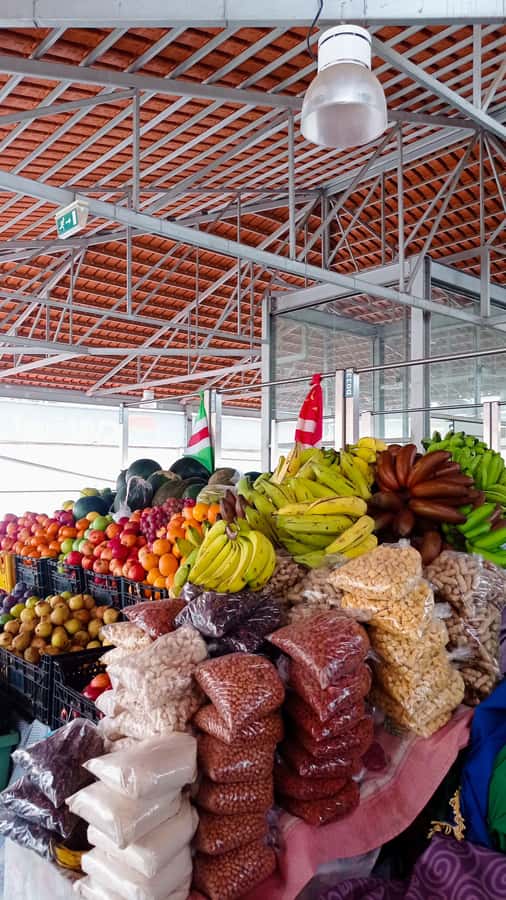
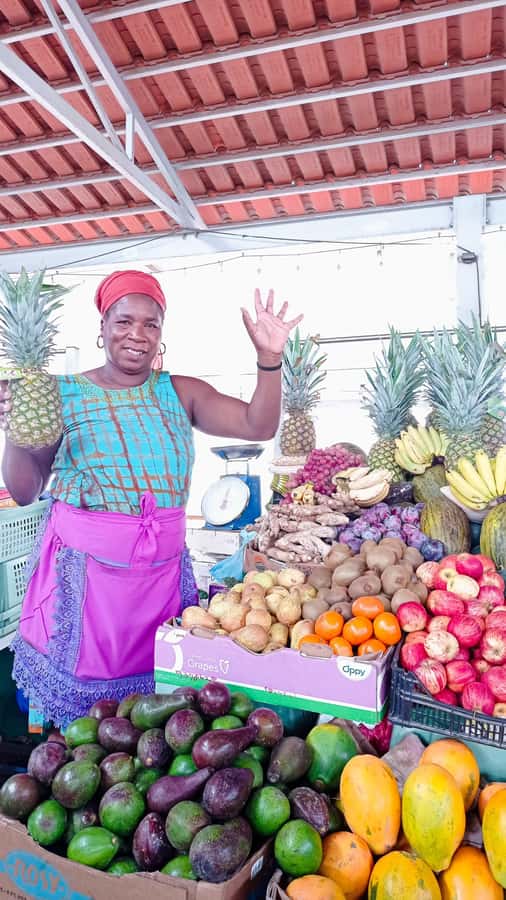
The Municipal Market is one of the most useful stops for understanding ordinary life in Praia. You can see local fruits and vegetables, meet residents, and watch the business of buying and selling food. This is a more grounded experience than simply looking at colonial architecture.
I like market visits because they give you details that formal sights often miss. You may notice the range of produce, the way goods are arranged, and the daily rhythm of the city. The guide can also help you understand what you are seeing and make introductions less awkward.
There is one important scheduling point: the Municipal Market is closed on Sundays. If your tour runs that day, this part cannot offer the same experience. The rest of the route still provides plenty to see, but anyone especially interested in local produce and everyday interaction should avoid Sunday if possible.
The market is also a good place to use your senses, but remember that this is a working public space. Ask before photographing people, follow the guide’s lead, and do not treat the market like a stage set.
Sucupira Market and the city’s shopping side
The next market stop is Sucupira, described as Praia’s largest flea market. It offers a different look at the city from the Municipal Market. Instead of focusing mainly on food, Sucupira gives you a chance to see local commerce, goods, and informal shopping in a larger setting.
You may find this stop more energetic and less orderly than a polished shopping center. That is part of its value, but it can also feel crowded or intense if you prefer quiet sightseeing. Keep your belongings secure and stay aware of the group.
The tour does not promise a long shopping session, so I would treat Sucupira as a cultural stop first and a buying opportunity second. If you see something you want, ask the guide about prices, quality, and how much time you have. The guide’s presence can make the market easier to navigate, especially if you do not speak Portuguese or Creole.
More things to do on Santiago:
- Santiago: Landscapes, Street Art, and Markets Day Trip
★ 4.8 · 316 reviews - From Port of Praia: Island Tour for Cruise Ship passengers
★ 4.5 · 190 reviews - Serra Malagueta: Principal Valley Hike & Lunch with Locals
★ 4.7 · 64 reviews - Praia: Baobab Mysterious Tree, Green Valley & Old City Hike
★ 4.8 · 53 reviews
The road to Cidade Velha
After Praia, the tour heads to Cidade Velha, a UNESCO World Heritage Site and a central place in Cape Verde’s national story. The town is described as the cradle of Cape Verdean culture, and its importance comes from more than age. It was the first European-built city in sub-Saharan Africa and a major setting for the development of the islands under Portuguese rule.
This is also where the tour’s treatment of slavery becomes important. Cape Verde’s early colonial economy was tied to the forced movement and exploitation of enslaved people. The route does not present the old buildings as romantic ruins detached from that past. It includes the slave market at Pelourinho and places the town’s growth within a harder, more complicated story.
That context matters. Cidade Velha can look peaceful today, with sea views and old stonework, but the town’s importance was connected to power, trade, religion, and human suffering. A guide can help you read the remains with more care.
São Filipe Fortress above the old town
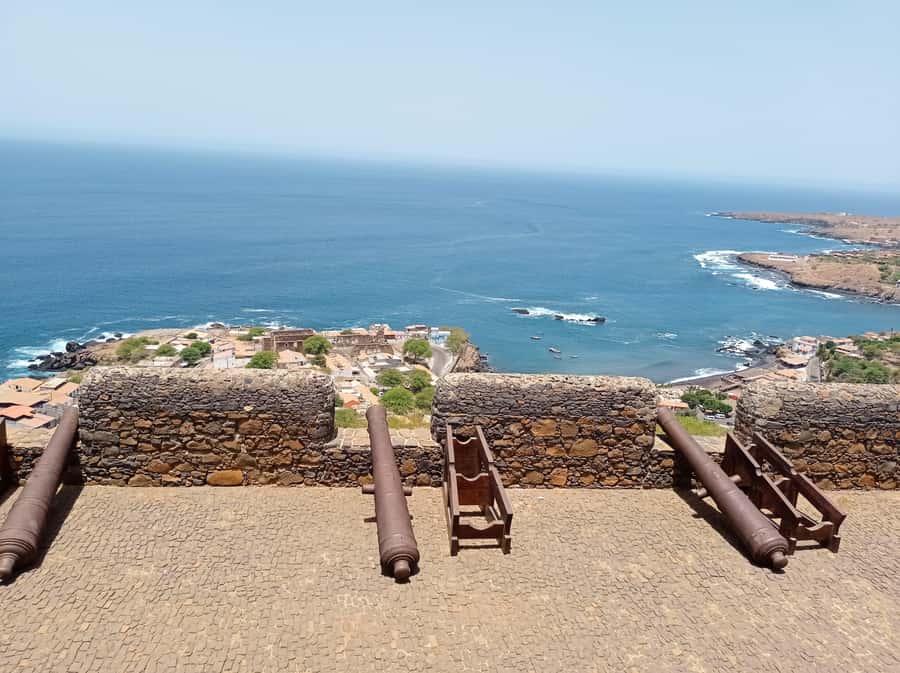
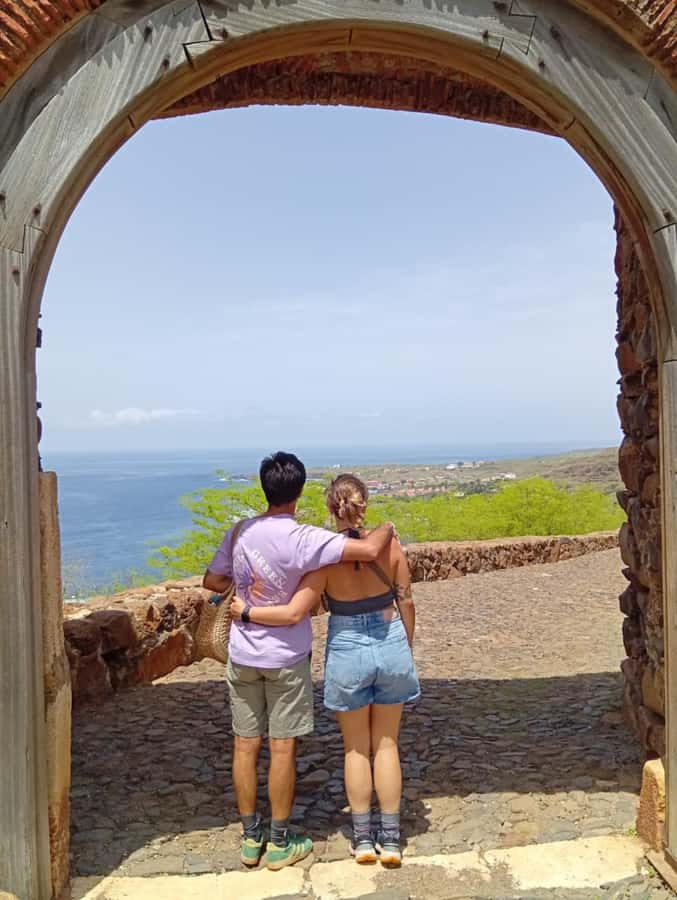
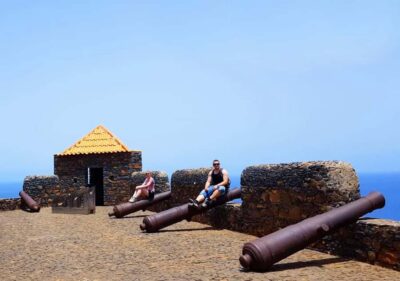
The first major stop in Cidade Velha is the Royal Fortress of São Filipe. Built to defend the city from pirate attacks, it sits 121 meters above sea level and gives you broad views over the town and the coast.
The fortress is one of the tour’s strongest photo stops, but the view is only part of the appeal. Its position shows why the site mattered. From above, you can understand the town’s location and see how defense shaped the settlement.
Entrance costs 5 euros per person and is not included in the tour price. Bring cash or confirm the accepted payment method before setting out, since the supplied tour details do not specify payment arrangements. The extra fee is modest, but it is worth adding to your budget when comparing the total cost.
The climb and surfaces may be difficult for anyone with limited mobility. Even if you manage the walk comfortably, the heat can make the uphill section feel harder than expected. Take water and use sunscreen.
Cathedral ruins and the marks of empire
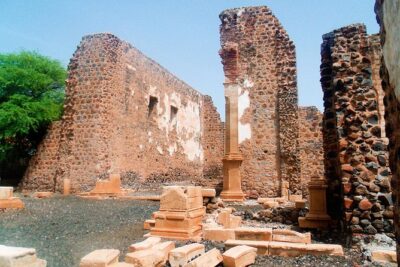
Cidade Velha contains the ruins of what is described as the first cathedral in sub-Saharan Africa. The remaining stonework offers a direct link to the city’s former religious and political role.
Do not expect an intact grand church. The power of the site comes from imagining its original place in the settlement and seeing how much has survived. The guide can fill in the gaps, explain the cathedral’s position in the city, and connect it with the wider colonial system.
This is also a good point to ask questions. David has been praised for making Cape Verdean history engaging and for bringing visitors closer to his home island. Edney has been noted for answering questions and sharing anecdotes. Guide quality matters here because the ruins alone do not explain themselves.
Pelourinho, Banana Street, and the old churches
The route continues to Pelourinho, the old slave market. This is one of the most serious stops on the tour, and it deserves quiet attention. The site connects the attractive old town with the violence and forced labor that helped support colonial wealth.
From there, you visit Banana Street, known for its traditional houses, followed by the Church of Nossa Senhora do Rosário and the Convent of São Francisco. These buildings help you see the town at street level, not just from the fortress above.
Banana Street is particularly useful for visual context. Traditional houses show how the old settlement was arranged, while the religious buildings point to the role of Catholic institutions in colonial society. You will see several sites in a short time, so listen for the guide’s links between them rather than trying to memorize every detail.
The tour includes time for walking, sightseeing, photos, and some free time. Still, four hours does not allow endless wandering. If you prefer to linger at one church or examine every wall, a private or longer visit may suit you better.
Fishermen, boats, and the sea
One of the most human moments comes when fishermen return from the water in traditional boats carrying fresh fish. This gives Cidade Velha a living present. The town is not only a historic site preserved for visitors. People still work along the shore and depend on the sea.
The timing of this sight can vary, so I would view it as a possible part of the town’s daily rhythm rather than a guaranteed performance. If the boats are coming in, watch respectfully and let the guide explain what you are seeing. Avoid getting in the way of working fishermen.
This stop also adds balance to the tour. After military forts, religious ruins, and the slave market, the fishing boats remind you that Cape Verdean life continues beyond the official monuments.
A local lunch with a sea view
The tour finishes its Cidade Velha visit with lunch at a typical local restaurant overlooking the sea. Lunch is not included, so you should plan to pay separately for your meal and any drinks.
I like this arrangement because it leaves room for a more local meal instead of forcing every person into a prepaid menu. The drawback is less control over the final cost, especially if you are trying to keep a strict budget. Ask the guide about the expected menu and prices if that matters to you.
The sea view should make this a pleasant pause after the walking sections. It is also a chance to ask the guide about food, family life, language, plants, and daily customs. Marie-Laure specifically valued David’s knowledge of Cape Verdean flora and fauna, along with his patience and willingness to answer questions. Those qualities can make lunch feel like part of the cultural visit rather than a simple meal break.
What $70 really buys you
At $70 per person, this is not the cheapest way to spend four hours in Praia. You also pay 5 euros to enter the fortress, and lunch and personal expenses are separate. The final cost therefore needs to be judged against what is included.
You are paying for hotel transportation, a guide, a small group of no more than 10 people, two markets, Praia’s main central sights, Cidade Velha, and the return to your hotel. For many visitors, the transport and guide are the key savings. Reaching Cidade Velha independently requires planning, and understanding the sites without context is harder.
The value is strongest if you want a structured introduction and do not speak Portuguese. It is also useful if you have only a short window in Santiago. If you are comfortable arranging transport, researching the sites, and exploring on your own, $70 may feel high.
The four-language guiding service is another practical advantage. English, French, Portuguese, and Spanish are available. The strong feedback for Edney and David centers on clear explanations, personal stories, patience, and flexibility, which are exactly the traits that make a short cultural tour worthwhile.
Who should book it
I would recommend this tour to first-time visitors to Santiago who want both the capital and the old colonial center in one outing. It suits people who enjoy history but also want markets, food, working neighborhoods, and contact with local life.
It is a good fit for couples, solo visitors, and small groups who prefer a guide to handle the route. The group limit of 10 keeps it more personal than a large bus tour, though the experience can still feel full because the schedule covers many stops.
You should think twice if you have difficulty walking, use a wheelchair, dislike sun exposure, or want a slow visit focused on one site. The tour moves between several locations, includes uneven or uphill sections, and does not offer a fully accessible format.
Bring comfortable walking shoes, a hat, sunscreen, water, and a camera. Smoking is not allowed during the activity. The Municipal Market is closed on Sundays, so choose another day if that stop is important to you.
Should you book this Praia and Cidade Velha tour?
Book it if you want a practical first look at Santiago, especially if hotel pickup, multilingual guiding, and a small group are worth paying for. The combination of Plateau, two markets, the Royal Fortress, cathedral ruins, Pelourinho, traditional streets, churches, fishermen, and a sea-view lunch gives you more range than a simple sightseeing drive.
Skip it if you want a cheap, independent outing or a long, unhurried study of Cidade Velha. Remember to add the fortress fee and lunch to the $70 price.
For most visitors with limited time, I see this as a strong introduction to Cape Verde’s capital and its oldest European-founded city. The best reason to choose it is not just the number of sights. It is the chance to connect Praia’s present-day streets with Cidade Velha’s difficult past, guided by someone who can explain how the island’s culture took shape.
FAQ
How long does the Praia and Cidade Velha tour last?
The tour lasts four hours, including the visits to Praia and Cidade Velha and the return to your hotel in Praia.
What is the price of the tour?
The listed price is $70 per person.
Is hotel pickup included?
Yes. Hotel pickup and drop-off in Praia are included. You can wait at the hotel reception or outside the hotel, and pickup usually arrives about 10 minutes before the scheduled time.
Is lunch included?
No. Lunch is not included in the tour price. The group visits a typical local restaurant with a sea view, but you pay for your own meal.
Is the Royal Fortress entrance fee included?
No. Entry to the Royal Fortress of São Filipe costs 5 euros per person and is paid separately.
Is the Municipal Market open every day?
No. The Municipal Market is closed on Sundays.
What languages are available for the guided tour?
Guiding is available in English, French, Portuguese, and Spanish.
How large is the tour group?
This is a small-group tour limited to 10 participants.
Is the tour suitable for wheelchair users?
No. The tour is not suitable for wheelchair users or people with mobility impairments.
What should I bring?
Bring comfortable walking shoes, a sun hat, sunscreen, water, and a camera. Smoking is not allowed during the activity.
Just added in Praia
- Santiago Island: Private Airport Transfer to Praia or Vice Versa★ 5.0 · 3 reviews
- Hiking Águas Belas Cave★ 4.5 · 3 reviews
- Tarrafal Beach Tour: Boat Trip to the Lighthouse, Snorkel & BBQ Lunch★ 5.0 · 5 reviews
- Santiago island & Full Day Island★ 5.0 · 2 reviews
- Best of Santiago Island: Cidade Velha, Workshop & Tarrafal Beach Tour★ 4.5 · 3 reviews
- Santiago Island: Trek from Serra Malagueta to Rabelados Community★ 5.0 · 2 reviews
- Santiago Island: Longueira, Pico de Antónia & Monte Tchota Trek★ 5.0 · 1 review
- Hiking Serra Malagueta Natural Park★ 5.0 · 2 reviews
Cidade Velha UNESCO Tours, compared.

Santiago Island: Highlights of Cidade Velha with Local Guide
Read our review →
Like Locals: Praia and Cidade Velha Tour + Local Pontxi Tasting
Read our review →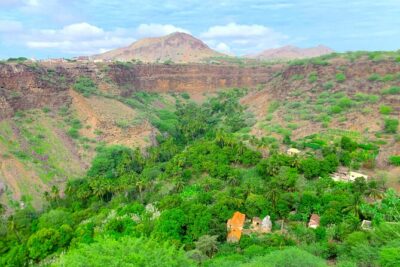
Santiago Island: 4-Hour Calabaceira Valley Hike & Guided Tour to Cidade Velha
Read our review →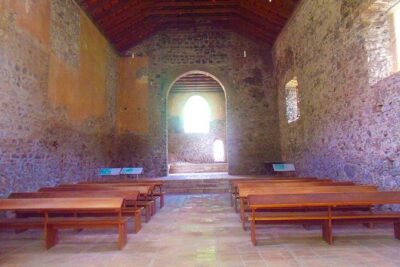
Santiago Island: Best of Praia & Cidade Velha Tour, a World Heritage Site
Read our review →
Guided City tour Praia with Cidade Velha (World Heritage)
Read our review →Browse the lists this tour appears in