
Reviewed · SANTIAGO TOURS
Create your own artesanal pottery with locals
Clay connects you to Cape Verde. This four-hour visit to Fonte Lima, a small village on northern Santiago Island, gives you a direct look at pottery made by a local women’s association. I like the chance to make your own pieces and the honest connection with local women artisans, rather than simply buying finished souvenirs.
The main consideration is timing. You cannot take the pottery home that day. The pieces need to be completed and fired later, then received after a few days, so you should confirm the collection or delivery details before booking.
In This Review
- Key points to know before booking
- Reaching Fonte Lima from Santiago Island hotels
- Meeting the women of Fonte Lima
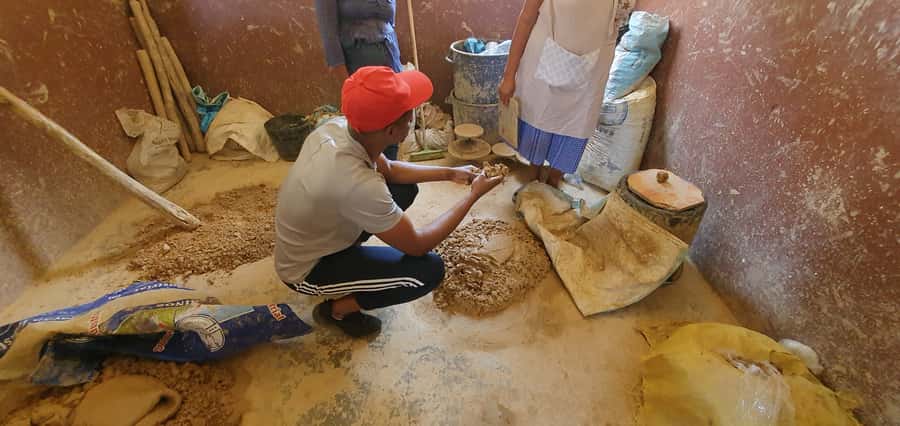
- Starting with clay extraction and preparation
- Shaping your own pottery pieces
- Decorating the pottery before it leaves the village
- Why the pottery cannot come home that day
- The seasonal side of village pottery
- Brunch, language, and comfort
- Is $129 per person a fair price?
- Who will enjoy this Fonte Lima experience?
- Should you book this pottery tour?
- FAQ
- Where does the pottery activity take place?
- How long does the experience last?
- What is included in the price?
- Can I take my pottery home the same day?
- What languages are available?
- Is hotel pickup included?
- Is the activity private?
- Can I cancel for a full refund?
Key points to know before booking
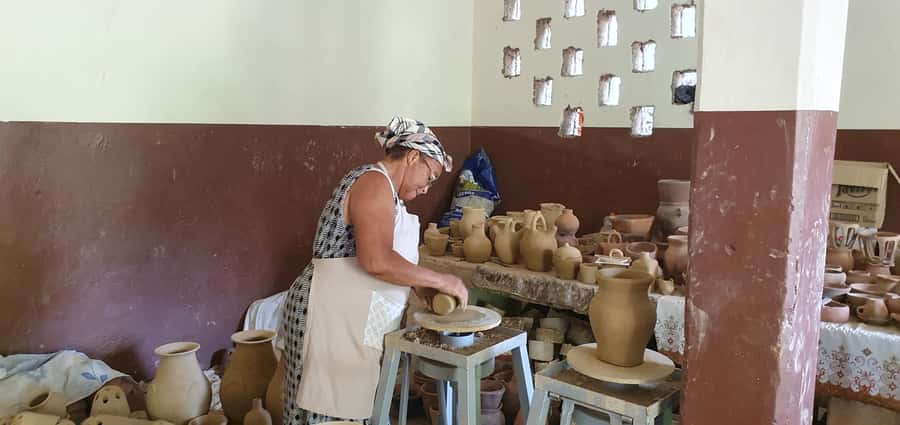
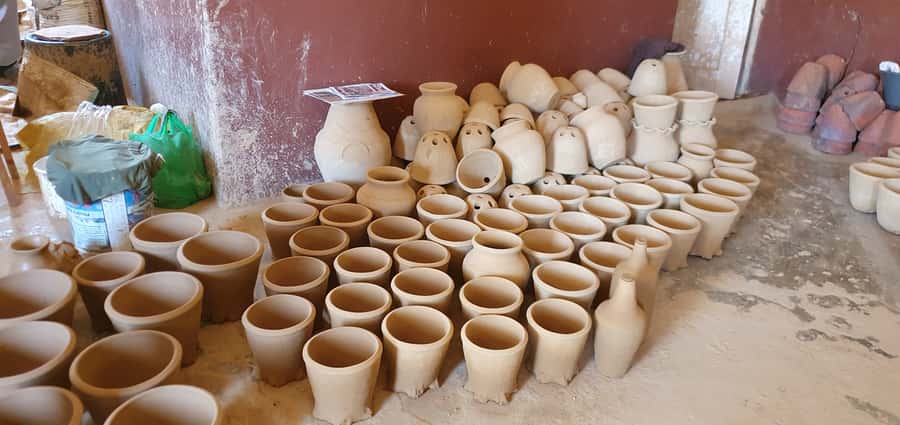
- Five traditional pottery stages: You take part in clay extraction, clay treatment and mixing, modeling, and decoration, within the broader production process.
- Women-led village activity: Pottery is carried out by women in Fonte Lima and supports the household economy alongside farming and domestic duties.
- Your pieces arrive later: The finished pottery is not available on the day of the tour.
- Private four-hour experience: Hotel pickup and drop-off are included, with a live guide in English, French, or Portuguese.
- Seasonal production: Pottery is practiced mainly during the dry season, from November through July.
- Brunch is included: The price covers the activity, your pottery pieces, transport, and brunch.
Reaching Fonte Lima from Santiago Island hotels
Your guide picks you up at your hotel and drives you to Fonte Lima, a small village on the north side of Santiago Island. The experience lasts about four hours, though the exact starting time depends on availability when you book.
I like the fact that transport is included. Fonte Lima is not presented as a city-center workshop that you can casually find between other sights. Pickup makes the visit easier to fit into a day on Santiago, especially if you do not have a rental car or prefer not to arrange a village transfer yourself.
You are asked to wait in the agreed pickup place 10 minutes before departure. That is a small but useful detail in Cape Verde, where rural transfers can be harder to coordinate than a hotel lobby pickup. The activity is available as a private group, so you do not have to share the workshop with a large mixed crowd.
The drive is part of the change in pace. You leave the hotel setting behind and head toward a village where pottery exists alongside farming and household work. The available information does not give a precise driving time or a detailed route, so I would not plan another tightly scheduled excursion immediately afterward.
More things to do on Santiago:
- Island tour with German-speaking guide for cruise guests
★ 4.1 · 91 reviews - From Praia: Santiago Island Highlights Tour
★ 4.6 · 40 reviews - Praia: Day trip by minibus for cruise passengers
★ 4.7 · 38 reviews
Meeting the women of Fonte Lima
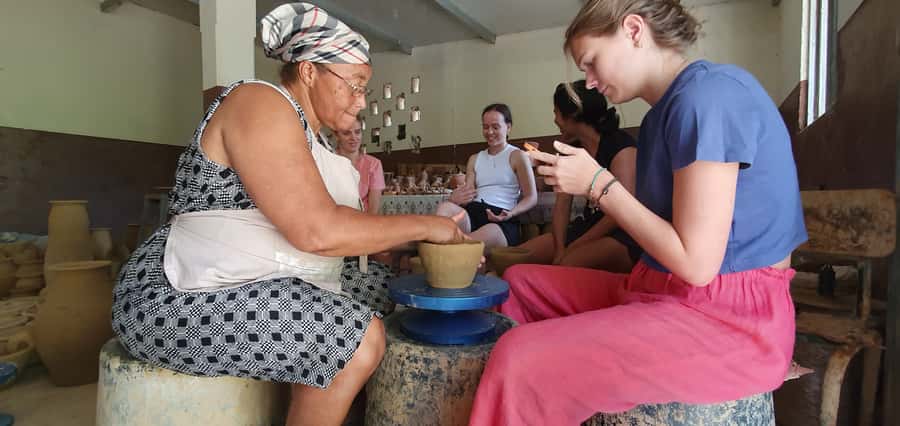
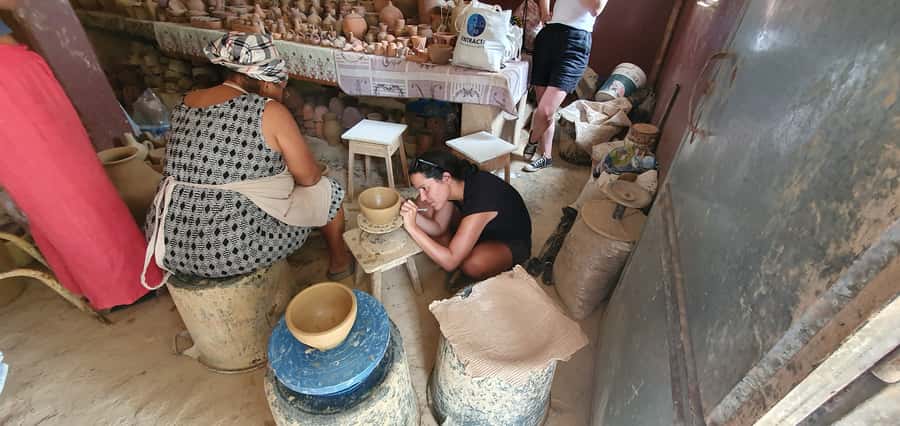
At Fonte Lima, a group of women welcomes you and introduces you to the local pottery process. The setting matters here. You are not only being shown a finished craft, and you are not simply watching an artist perform for an audience. You are invited to take part in the work.
Pottery in Fonte Lima is traditionally carried out by women. It developed alongside domestic and farming responsibilities, much like another form of household work. That role gives the activity practical importance: the pottery helps support the family economy and gives the women a recognized place in the community.
I find this social context one of the strongest reasons to choose the tour. A handmade bowl or other small piece has more meaning when you understand who made it, how the work fits into village life, and why it is done at particular times of year.
You should also keep expectations realistic. This is a hands-on introduction, not a professional ceramics course. The information provided does not promise a kiln demonstration, a long technical lesson, or advanced instruction. The value comes from taking part in a local process and creating something personal.
Starting with clay extraction and preparation
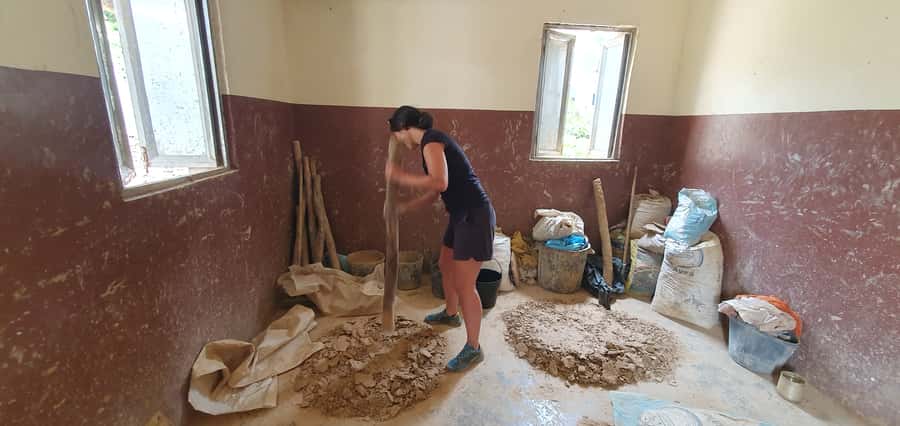
The pottery process begins with clay extraction. This first step helps you see that the material does not appear at the workshop ready to shape. It must be found, gathered, and prepared before it can become a useful object.
Next comes clay treatment and mixing. This stage is easy to overlook when you buy pottery in a shop, but it is essential. The clay needs to reach a workable consistency before modeling can begin. You get a clearer sense of the physical effort behind an apparently simple handmade cup, bowl, or other piece.
The supplied details do not specify how far you travel for the clay extraction or whether you personally collect a large amount of it. I would treat this as an introduction to the stage rather than assume a long hike or a full day of raw-material gathering.
This part of the visit is especially useful if you enjoy seeing the complete chain of a craft. You start with basic material, follow its preparation, and then move toward the creative stages. That makes the finished piece feel connected to the village and its resources.
Shaping your own pottery pieces
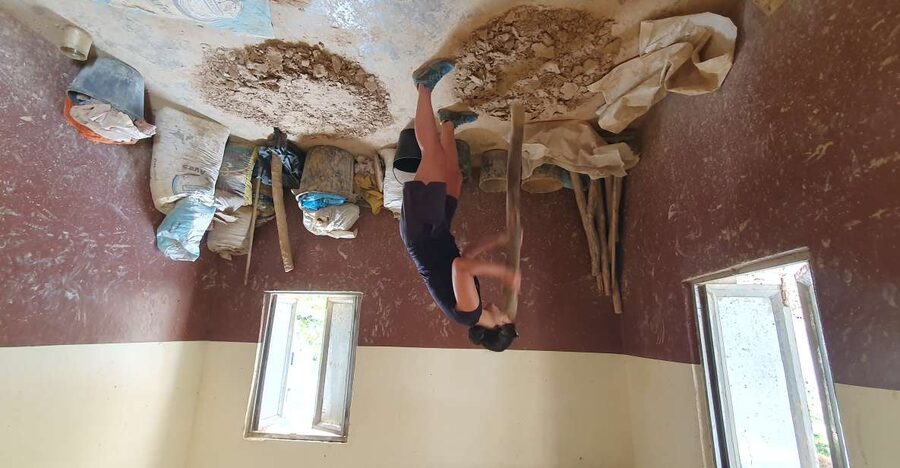
After the clay is treated and mixed, you move into modeling. This is the point where your hands begin to direct the result. You will produce your own pieces under the guidance of the women in the association.
The exact objects and number of pieces are not specified, so I would not book expecting a particular bowl, plate, vase, or quantity. Instead, think of this as a chance to form pottery at a beginner level and leave your own mark on it.
Modeling can be more difficult than it looks. Clay responds to pressure, moisture, and handling, and a shape that seems simple may take patience. That is part of the appeal. You are not buying a perfect object from a shelf. You are making something that carries the small irregularities of a first attempt.
I like this stage because it gives the activity a personal center. The visit is not just cultural observation. You participate in a craft that is connected to daily life in Fonte Lima, and your final piece becomes a physical reminder of that meeting.
A completely different sort of day out:
- Full-Day Santiago – Villages, Nature & Local Culture
★ 4.7 · 17 reviews - Santiago Island Experience
★ 5.0 · 12 reviews - Boat Trip to Aguas Belas Cave+Barbecue
★ 5.0 · 6 reviews - Day with locals people
★ 5.0 · 6 reviews
Decorating the pottery before it leaves the village
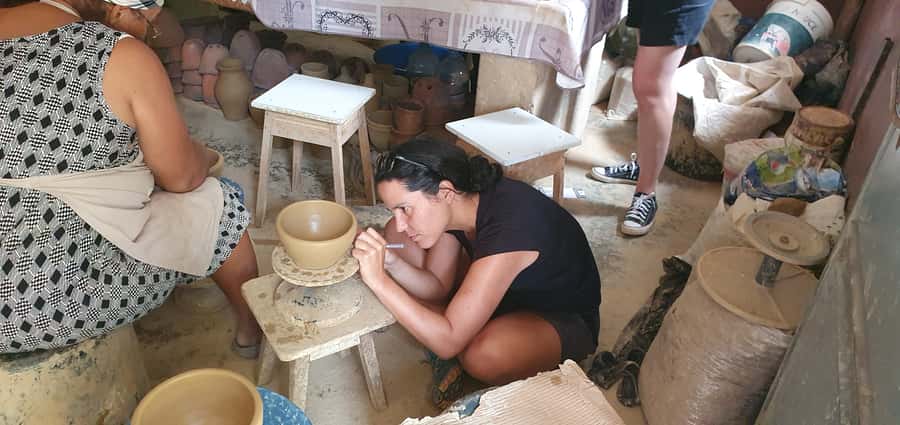
Once the piece is shaped, you work on decoration. The information does not list the exact colors, patterns, or tools used, so I would avoid arriving with a fixed idea of a particular design. Let the local guidance shape what you make.
Decoration is also where your piece becomes clearly yours. Even if the form is simple, your choices can make it different from every other object produced during the session. I would pay close attention to the women’s instructions and take your time rather than rush to finish.
The activity is suitable for people who enjoy making things with their hands, but it may be less appealing if you want a fast sightseeing stop. Clay work takes patience, and the four-hour duration gives the process room to unfold. You will not simply pose beside a workbench, take a quick photo, and leave.
Why the pottery cannot come home that day
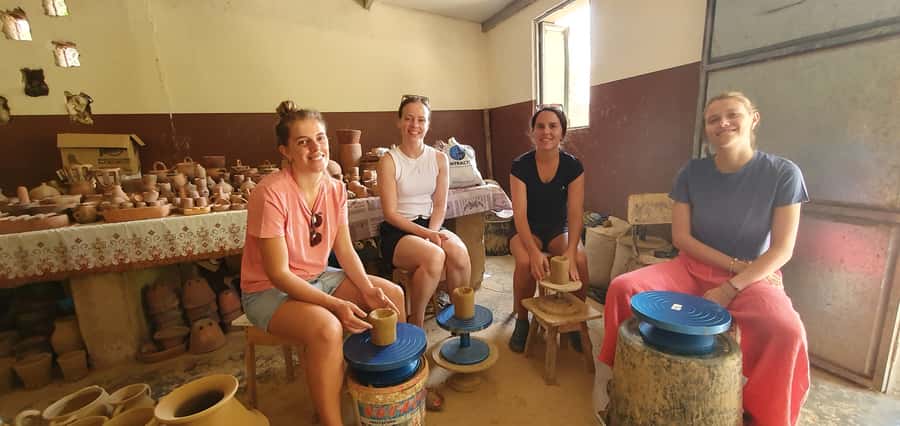
The most important practical point is that you do not receive the finished pieces on the same day. After you shape and decorate them, more work must happen before they are ready. The pieces are to be received after a few days.
The provided details do not explain whether the pieces are collected at a specific location, delivered to your hotel, or handled another way. Ask the provider, CVT, Cabo Verde Travel, how and when you will receive them before you book. This is particularly important if you are leaving Santiago soon after the activity.
I would also avoid packing the tour at the very end of your Cape Verde trip unless the return arrangement is clear. The pottery is included in the $129 price, but its value depends partly on actually receiving it.
That delay is not a flaw in the craft. It is simply the reality of making pottery by hand. Still, it changes the experience from an ordinary souvenir purchase into a later reminder of your time in Fonte Lima.
The seasonal side of village pottery
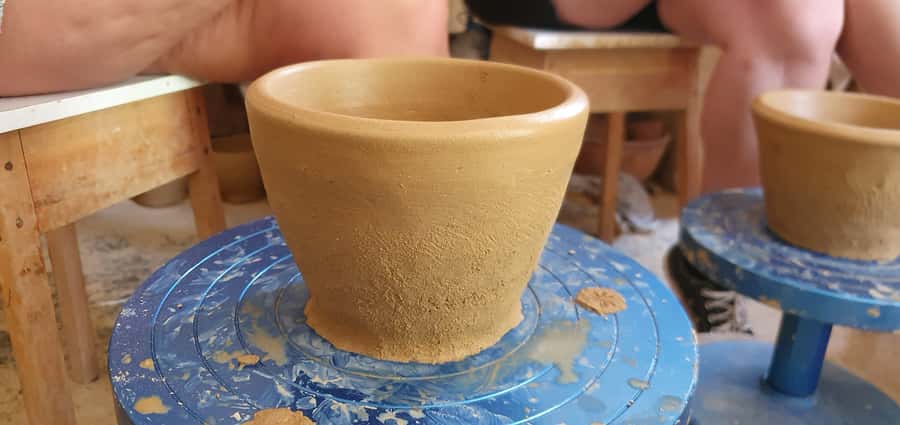
Pottery in Fonte Lima is mainly practiced during the dry season, from November through July. During the rainy season, the women turn their attention to growing corn and beans.
This seasonal rhythm gives the activity useful context. Pottery is not described as a year-round tourist performance. It fits around agriculture and household responsibilities, and the work changes as the demands of the farming calendar change.
If you are visiting between November and July, the pottery activity is within its stated working season. If you are visiting during the rainy months, ask CVT to confirm that the experience is operating before you reserve. The tour information gives the season clearly, but it does not promise availability outside it.
For me, this is one of the most meaningful parts of the visit. You see how a local craft is tied to weather, food production, and family income. The result is a fuller picture of village life than a simple workshop demonstration can provide.
Brunch, language, and comfort
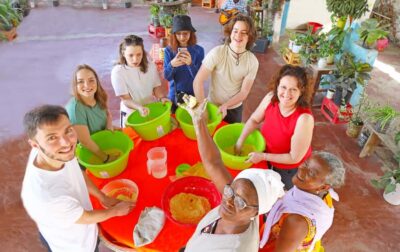
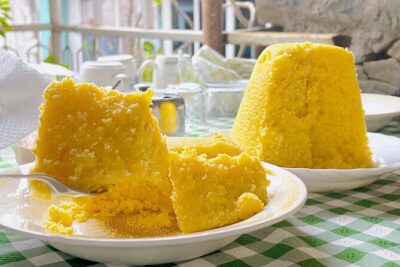
Brunch is included in the price. No menu or dietary information is supplied, so if you have food allergies, restrictions, or strong preferences, ask ahead of time rather than assume what will be served.
A live guide can conduct the experience in English, French, or Portuguese. That range is helpful, especially for a hands-on activity where clear instructions matter. You will want to understand how to handle the clay, shape the piece, and decorate it, not just listen to a general explanation.
The experience is listed as wheelchair accessible. That is encouraging, but the details do not explain the surfaces in Fonte Lima, the workshop entrance, seating, or access to every stage of clay production. If you use a wheelchair, contact the provider before booking and ask how each part of the activity is arranged.
Alcohol and drugs are not allowed. Babies under one year old are not considered suitable for this activity. Those rules are straightforward, but they may affect families planning a private outing.
Is $129 per person a fair price?
At $129 per person, this is not the cheapest way to spend four hours on Santiago Island. The price includes hotel pickup and drop-off, a private guided activity, brunch, and the pottery pieces you create.
I think the value depends on what you want from a Cape Verde excursion. If you are looking only for a low-cost craft class, the price may feel high. You are paying not just for clay and instruction, but also for private transport, a local connection in Fonte Lima, a guide in your chosen language, and the time spent following several stages of the pottery process.
The private format helps justify the cost for couples, families, or small groups who want a more personal outing. You can avoid the fixed pace and crowded feel of a large group, though the exact group size is not stated beyond the private arrangement.
The delayed pottery also deserves a place in the value calculation. Your pieces are included, but you must make sure the handover is practical. If you will not be in Santiago for several days, clarify the plan before paying.
Free cancellation up to 24 hours before the activity and the reserve-now, pay-later option add flexibility. They do not make the tour cheap, but they reduce some of the risk when your island plans are still changing.
Who will enjoy this Fonte Lima experience?
I would recommend this activity to you if you enjoy local crafts, village visits, and making something rather than only looking at it. It suits couples, families with older children, and small private groups who want a slower cultural experience away from standard sightseeing routes.
It is also a good choice if you care about the economic role of women’s work. The pottery association is not a decorative detail. The activity contributes to household income and fits into the community’s seasonal pattern of work.
I would hesitate if you need a finished souvenir in your luggage that same afternoon. I would also think twice if you dislike hands-on activities, cannot spare four hours, or have an itinerary that leaves Santiago immediately after the visit.
Before booking, I would ask three questions: how many pieces are included, exactly how you receive them after a few days, and what happens if your visit falls outside the November to July pottery season.
Should you book this pottery tour?
Book it if you want personal contact, a private setting, and a useful look at how traditional pottery supports family life in Fonte Lima. I especially like that you follow the work from clay preparation through modeling and decoration, then leave with pieces connected to your own effort.
Skip it if you want a quick shopping stop or need instant souvenirs. The $129 price makes the most sense when you value transport, brunch, a private guide, and the cultural setting as much as the pottery itself.
For the right visitor, this is a thoughtful Santiago Island experience. Just arrange the later receipt of your pottery before you go, and allow the village pace to be part of the day.
FAQ
Where does the pottery activity take place?
It takes place in Fonte Lima, a small village on the north side of Santiago Island in Cape Verde.
How long does the experience last?
The activity lasts four hours.
What is included in the price?
The $129 per person price includes hotel pickup and drop-off, the pottery activity, your pieces, and brunch.
Can I take my pottery home the same day?
No. The pieces cannot be received on the same day. You receive them after a few days.
What languages are available?
The live guide is available in English, French, and Portuguese.
Is hotel pickup included?
Yes. Hotel pickup and drop-off are included. You should wait at the agreed pickup place 10 minutes before the scheduled time.
Is the activity private?
Yes. It is offered as a private group experience.
Can I cancel for a full refund?
Yes. You can cancel up to 24 hours in advance for a full refund. You can also reserve now and pay later.
Just added in Assomada
- Santiago Island: Assomada City Tour with Lunch★ 5.0 · 2 reviews
- Private Tour of Santiago – Discover the Island★ 4.8 · 5 reviews
- Praia: Santiago Island Highlights Tour with Breakfast★ 5.0 · 2 reviews
- Santiago Island: Full-Day Tour★ 4.3 · 5 reviews
- Assomada: Natural Park of Sera Malagueta Guided Tour★ 5.0 · 1 review
- Boat Trip to Aguas Belas Cave+Barbecue★ 5.0 · 6 reviews
- Day with locals people★ 5.0 · 6 reviews
- Santiago Island Experience★ 5.0 · 12 reviews
Santiago Tours, compared.
Santiago Island Tour with Tastings and Tarrafal Beach
Read our review →

Santiago Island Tour: Meet with a Local Family & Tarrafal Beach
Read our review →
Island tour with German-speaking guide for cruise guests
Read our review →


Santiago Island: Highlights of Cidade Velha with Local Guide
Read our review →Browse the lists this tour appears in